
Short Answer: The leading eyeglasses fitting software tools cover three core functions — virtual try-on for frame selection, PD/SH measurement for optical accuracy, and frame fitting for dispensing. Topology Eyewear and FittingBox lead on virtual try-on; OptikamPad leads on clinical dispensing measurements; Zakeke serves e-commerce retailers; and Optogrid provides remote PD/SH measurement via patient photographs, enabling prescription eyewear sales online without in-person visits.
Choosing fitting software depends on what problem you are solving. A brick-and-mortar practice has different needs than an online optical shop, and a tool optimized for frame selection is not the same as one built for clinical PD measurement. This comparison covers five tools across those categories, with their key features, pricing models where publicly available, and the practice types each serves best.
For a broader look at software categories optical retailers need — from inventory management to POS systems — see Essential Software Solutions for Eyewear Retailers.
At a Glance: Eyeglasses Fitting Software Comparison
| Solution | Primary Function | Pricing Model | Best For |
|---|---|---|---|
| Topology Eyewear | 3D custom frame fitting | Per-frame (custom pricing) | Practices selling custom-made eyewear |
| OptikamPad | Clinical dispensing measurements | Hardware + software license | Opticians focused on dispensing accuracy |
| FittingBox | Virtual try-on (in-store and online) | From $59/month (Shopify app) | Retailers wanting try-on on websites and in-store |
| Smart Mirror by ABS | In-store AR fitting | Contact for pricing | Optical chains with physical locations |
| Zakeke | E-commerce virtual try-on | Usage-based pricing | Online eyewear retailers |
| Optogrid | Remote PD/SH measurement | Subscription | Practices offering online prescription eyewear |
What to Look for in Eyeglasses Fitting Software
Before choosing a platform, evaluate it against these four criteria:
Measurement accuracy. Inaccurate pupillary distance causes real clinical harm. Research published in PMC states: “If the pupillary distance is measured incorrectly, the optical centre will be incorrectly set within the spectacle frames, which can only be rectified by remeasuring the pupillary distance correctly, and remaking the spectacles.” Any software used for measurement must meet tolerances set by ISO 16034:2002 (less than 0.33 prism diopter of induced prismatic error).
Integration with your workflow. In-store tools need to connect to your frame inventory or practice management system. E-commerce tools need to embed in your website or online store. A tool that requires manual data re-entry will slow your team down.
Ease of use for staff and patients. A tool your staff cannot operate confidently will not be used consistently. For patient-facing tools (virtual try-on, remote PD submission), high friction at any step kills completion rates. Prioritize tools with short onboarding, clear error handling, and minimal setup steps per transaction.
Target use case. Virtual try-on tools help customers choose frames — they are not measurement tools. Clinical measurement tools capture PD, segment height, and frame dimensions for lens fabrication. Understand which gap you are filling before comparing options.
1. Topology Eyewear
What it does: Topology uses the TrueDepth sensor in iPhones and iPads to generate a 3D map of a patient’s face from a short video scan. Each pair of glasses is manufactured to match that specific facial geometry, making adjustments at dispensing unnecessary.
Key features:
- 3D facial scanning via iPhone TrueDepth sensor (projects 30,000 invisible dots to capture face geometry)
- Virtual try-on layered over the 3D scan
- Custom-manufactured frames calibrated to the patient’s face measurements
- Guaranteed fit, including lens position adjusted for the patient’s specific frame placement
Pricing model: Custom (per frame, based on retail partner agreements). Topology does not publish a standard subscription rate — pricing is arranged through their retail program.
Best for: Independent optical practices and boutiques that want to offer made-to-measure eyewear as a premium differentiator. Not suited for high-volume dispensing environments or price-sensitive markets.
Limitation: Requires an iPhone or iPad with TrueDepth camera. Frames are manufactured by Topology, so you are selling their product line, not your existing frame inventory.
2. OptikamPad
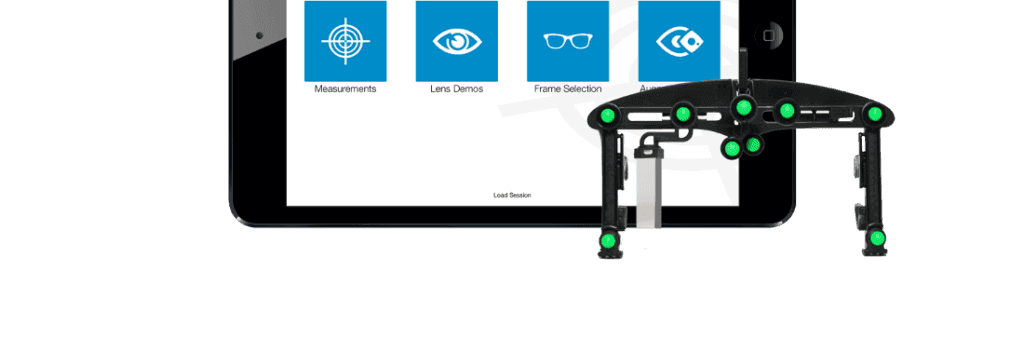
What it does: OptikamPad is a clinical dispensing tool used by opticians to capture the measurements needed to correctly position lenses in frames. It runs on an iPad and uses Optikam’s OPD device or LiDAR technology for touchless measurement.
Key features:
- Ten position-of-wear measurements from a single image (monocular PD, segment height, frame measurements, and more)
- Progressive addition lens (PAL) overlay — alerts the optician if the chosen lens design does not provide sufficient reading area given the frame and patient measurements
- Lens thickness simulation, accounting for decentration and frame dimensions
- Frame selection module with side-by-side photo comparison of up to four frames
- Patented LiDAR-based measurement requiring no physical contact with the eyewear
Pricing model: Hardware purchase (OPD device) plus software license. Contact Optikam directly for current pricing — it is not published publicly.
Best for: Dispensing opticians and optical practices that need clinical-grade measurement accuracy, particularly for progressive lenses. The PAL overlay feature is especially useful when fitting complex prescriptions.
Limitation: Requires the Optikam hardware device for full functionality. This is an in-person, in-store tool — it does not support remote or online measurement workflows.
3. FittingBox
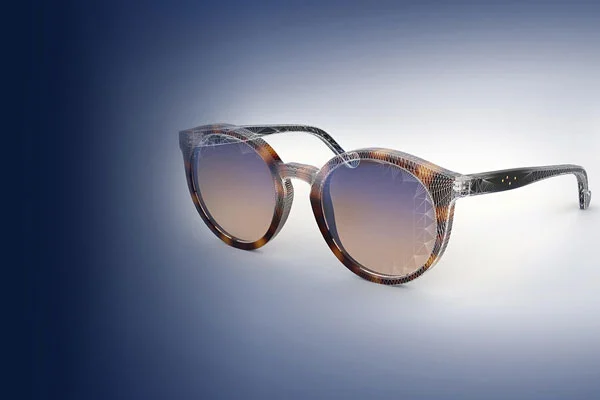
What it does: FittingBox provides augmented reality virtual try-on for both in-store displays and e-commerce websites. It maintains a database of over 195,000 digitized frame references from more than 1,200 brands, allowing customers to see accurately-sized frames on their face in real time.
Key features:
- Real-time AR try-on that detects face features and fits frames within 400 milliseconds
- Automatic detection and digital removal of glasses currently being worn, for a clean try-on
- “Size Guarantee” feature that ensures frame dimensions are accurately represented
- Two deployment modes: Standard (in-store display, plug-and-play) and Advanced (website embed with custom configuration)
- Shopify app available for direct e-commerce integration
- Access to 195,000+ digitized frame references across 1,200+ brands
Pricing model: The FittingBox Shopify app starts from $59/month (up to 10 active products, 500 users/month), with a 14-day free trial. Enterprise pricing for in-store and website deployments is custom — request via FittingBox directly.
Business impact: According to FittingBox’s own data, online eyewear stores using virtual fitting tools see a 22% decrease in cart abandonment and returns decrease by up to 28% as shoppers gain confidence with accurate frame previews.
Best for: Optical retailers — both brick-and-mortar and e-commerce — that want virtual try-on as a sales and engagement tool, particularly those carrying major frame brands already in FittingBox’s database.
Limitation: FittingBox is a try-on and frame selection tool, not a clinical measurement tool. It does not capture PD, segment height, or other measurements for lens fabrication.
4. Smart Mirror by ABS
What it does: Smart Mirror by ABS is an in-store AR fitting system that combines virtual frame try-on with patient measurement capture. It is designed as a physical display unit installed in optical retail locations, giving patients an interactive experience at the frame board.
Key features:
- Real-time virtual try-on via an in-store display
- Pupillary distance (PD) measurement capture
- Frame comparison view for evaluating multiple options side by side
- Analytics dashboard for optometrists — tracks patient interactions and frame preferences
- Integration with practice management systems
Pricing model: Contact ABS directly for pricing. Smart Mirror is sold as an enterprise installation, typically through regional optical equipment distributors.
Best for: Optical chains and larger practices with physical retail locations that want a dedicated in-store fitting station. The analytics features make it useful for practices tracking patient engagement and frame preference data.
Limitation: Not suitable for online or remote workflows. Installation requires a physical device, and the upfront cost is more appropriate for high-volume locations than single-practitioner offices.
5. Zakeke Virtual Try-On
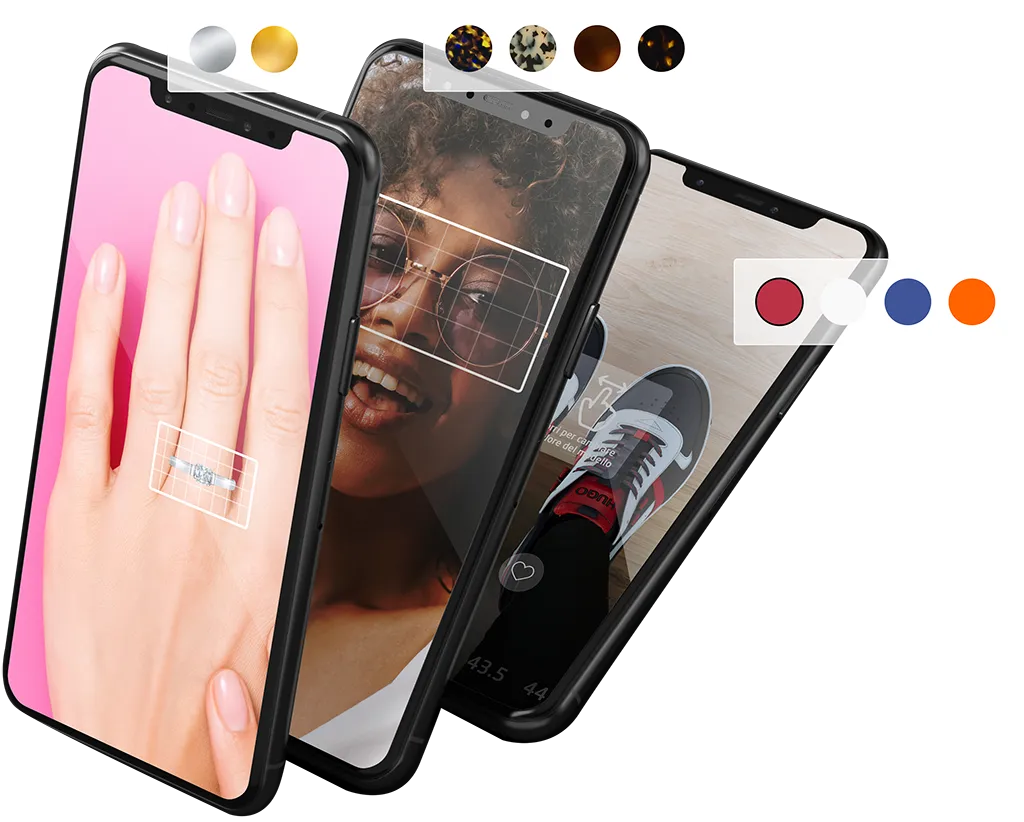
What it does: Zakeke is a product visualization and virtual try-on platform built for e-commerce. It supports eyewear alongside other product categories, allowing online shoppers to see how glasses look on their face using WebAR — no app download required.
Key features:
- Web-based AR try-on that works in browsers on smartphones, tablets, and desktops
- AI-assisted pupillary distance estimation using the device camera — can be made mandatory before checkout
- 3D model support for realistic frame rendering
- Integration via QR codes, embeddable links, or iframes
- Compatible with major e-commerce platforms including Shopify, WooCommerce, and Salesforce
Pricing model: Usage-based — priced on the number of try-on sessions and the number of products activated. 14-day free trial available. Contact Zakeke for custom volume pricing.
Best for: Online eyewear retailers who need a no-download virtual try-on that integrates directly into their existing e-commerce platform. Well-suited for brands that already have 3D models of their frames.
Limitation: Zakeke’s PD estimation is designed as a customer-facing convenience feature, not a clinical measurement tool. It is not a replacement for professional PD measurement at dispensing.
Where Optogrid Fits
The five tools above cover in-store virtual try-on, custom frame manufacturing, and in-store clinical measurement. None of them solve a distinct problem that many optical practices now face: capturing accurate PD and segment height from patients who are not physically present.
Optogrid addresses this gap. An optician uploads a patient photograph — or sends the patient a secure link to submit their own photo remotely — and marks calibration points to capture monocular PD and segment height measurements. This enables optical practices to sell prescription eyewear online without requiring the patient to visit the practice for measurement.
A comparative study published in PMC found that photo-based mobile measurement methods produced mean differences from pupillometer measurements of 0.59mm (±1.17mm 95% CI) for distance PD — within the spectacle manufacturing tolerances defined by ISO 16034:2002. For opticians managing remote prescription orders, this accuracy level makes photo-based measurement a clinically viable workflow.
For practices building out e-commerce for prescription eyewear, Optogrid’s Patient Links feature lets customers submit photos from their own devices — no in-person visit, no email attachments. This is particularly relevant for the WooCommerce integration Optogrid is developing, which will embed remote PD measurement directly into the prescription eyewear checkout flow.
For more on how remote PD measurement technology compares to traditional methods in clinical and business terms, see Remote Pupillary Distance Measurement: Technology and Business Impact.
Frequently Asked Questions
What is the difference between virtual try-on software and PD measurement software?
Virtual try-on software lets customers see how frames look on their face — it is a sales and selection tool. PD measurement software captures the pupillary distance needed to correctly position lenses in the frame — it is a clinical measurement tool. Most virtual try-on tools estimate PD as a secondary feature; they are not designed to meet the accuracy standards required for lens fabrication.
Which fitting software is best for an online optical shop?
Online shops need two separate capabilities: virtual try-on for frame selection (FittingBox or Zakeke cover this) and remote PD measurement for prescription accuracy. Optogrid handles the PD measurement side, allowing customers to submit photos remotely instead of visiting the practice.
Can virtual try-on software replace a professional PD measurement?
No. Virtual try-on tools that include PD estimation are useful for helping customers understand their measurements, but they are not a substitute for clinical-grade measurement at dispensing. An incorrect PD leads to misaligned optical centers, causing prismatic distortion, eye strain, and headaches that require the lenses to be remade.
How accurate do fitting software measurements need to be?
The relevant standard is ISO 16034:2002, which sets the tolerance for horizontally induced prism at 0.33 prism diopters. For most prescriptions, this corresponds to a PD tolerance of approximately ±0.5-1mm. Professional measurement tools — including pupillometers and calibrated photo-based systems — are designed to meet this standard.
Does OptikamPad work without the Optikam hardware device?
OptikamPad’s full measurement suite, including the position-of-wear measurements and PAL overlay features, requires the Optikam OPD device or a compatible LiDAR-enabled device. Some frame selection and comparison features may work without the dedicated hardware, but the clinical measurement workflow depends on it.
Is Topology Eyewear only available through optometrists?
Topology operates through retail partner programs with optical practices. Customers cannot purchase directly — they need to be fitted through a Topology retail partner. This limits availability compared to software-only tools, but ensures each frame is properly manufactured to that patient’s face scan.
What should I prioritize when evaluating fitting software for my practice?
Start with your primary gap: if patients are selecting frames in-store and you need dispensing accuracy, OptikamPad addresses that. If you want to increase online engagement and reduce returns, FittingBox or Zakeke provide virtual try-on. If you are building a remote or online prescription workflow, Optogrid’s photo-based PD measurement is the piece that makes the rest possible.

I am a seasoned software engineer with over two decades of experience and a deep-rooted background in the optical industry, thanks to a family business. Driven by a passion for developing impactful software solutions, I pride myself on being a dedicated problem solver who strives to transform challenges into opportunities for innovation.