Skip to content

Remote Eyewear Fitting Playbook for Optical Shops

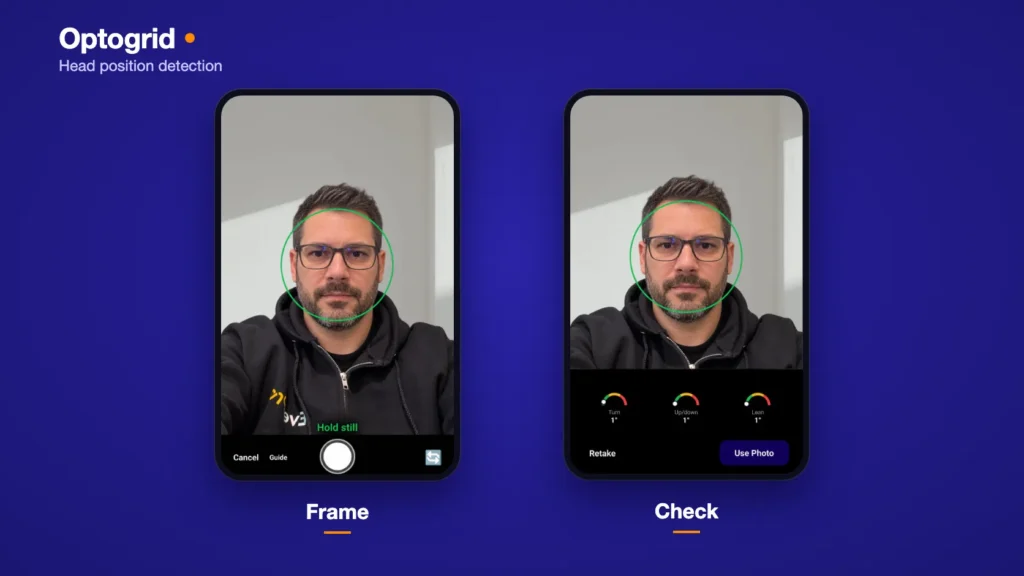
Yes, you can fit and sell prescription eyeglasses remotely. You need to solve five problems: collecting a verified prescription, capturing accurate remote measurements, guiding frame and lens selection at a distance, executing clean lab orders, and supporting the patient after delivery. This playbook walks through each step with the operational detail you need to launchContinue reading “Remote Eyewear Fitting Playbook for Optical Shops”

Measuring PD in Children: Age Ranges and Techniques

Children’s pupillary distance ranges from approximately 50 mm at age 5 to 60 mm at age 15, based on normative data from MacLachlan & Howland’s study of 1,311 subjects aged 1 month to 19 years. Growth is fastest between ages 5 and 8 (roughly 1.0-1.3 mm per year) and slows to under 0.5 mm perContinue reading “Measuring PD in Children: Age Ranges and Techniques”

Blue Light Glasses: What the Science Actually Says

Blue light glasses do not reduce digital eye strain. The American Academy of Ophthalmology states that “there is no scientific evidence that blue light from digital devices causes damage to your eye” and does not recommend any special blue light-blocking eyewear for computer use. A 2023 Cochrane review of 17 randomized trials confirmed these lensesContinue reading “Blue Light Glasses: What the Science Actually Says”

Photochromic Lenses: How They Work and Brand Comparison

Photochromic lenses (also called photosensitive or light-adaptive lenses) darken automatically when exposed to UV radiation and return to clear indoors. The reaction relies on organic photochromic molecules, primarily naphthopyrans, that undergo a reversible ring-opening reaction when UV light breaks a carbon-oxygen bond. Most current models reach full darkening in 15 to 45 seconds and needContinue reading “Photochromic Lenses: How They Work and Brand Comparison”

Color Blindness Test: Types, Methods, and Results

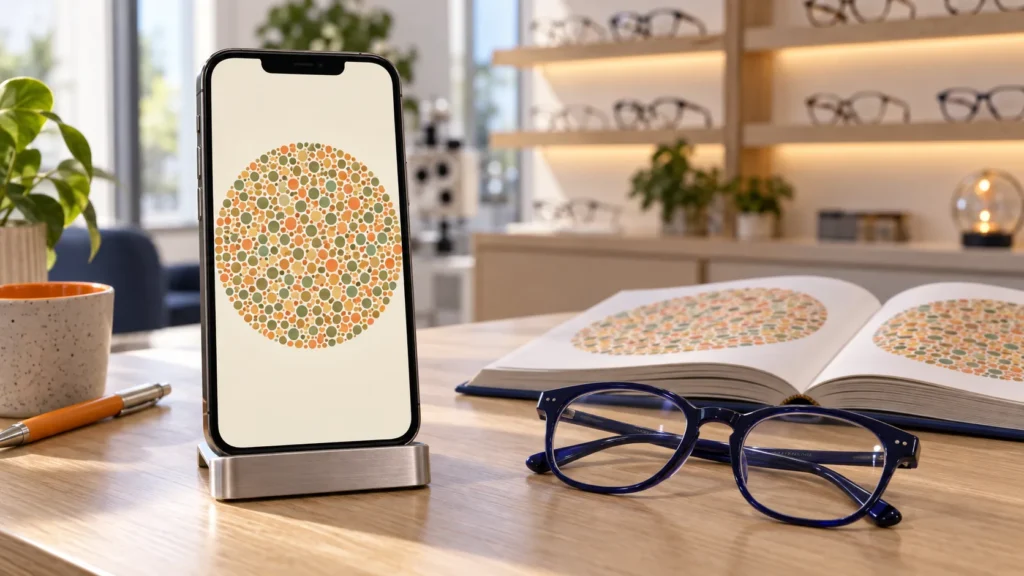
The Ishihara color plate test is the most widely used color blindness screening method, with sensitivity reaching 99% at a three-error threshold according to research in Ophthalmic and Physiological Optics. For general office screening, Ishihara plates are sufficient. When precise classification of the type and severity of deficiency is needed, such as for occupational certificationContinue reading “Color Blindness Test: Types, Methods, and Results”

Photophobia: Causes, Symptoms, and Treatments

Photophobia is not a disease but a symptom: abnormal sensitivity to light that causes discomfort, eye pain, or reflexive squinting and eye closure. It affects 80% to 90% of migraine patients during attacks, according to a review in Translational Neurodegeneration, and 75% of people with dry eye disease report pain sensitivity to light, per researchContinue reading “Photophobia: Causes, Symptoms, and Treatments”