

Short Answer: Children as young as 8 can wear contact lenses safely when supervised by a pediatric optometrist. The Contact Lenses in Pediatrics (CLIP) Study found that children aged 8–12 experienced no contact-lens-related problems during a 3-month trial, and the Bullimore safety review found that corneal infiltrative events in children aged 8–11 may actually be lower than in teenagers. Readiness is determined by maturity and hygiene habits, not a fixed birthday.
A Family Story: From Glasses to Contact Lenses
My 10-year-old daughter began her myopia management journey with Myosmart lenses, an excellent start supported by nightly low-concentration atropine eye drops. The results were promising, but we soon faced a challenge many active families will recognize: she plays volleyball.
Between diving for the ball and quick rotations on the court, her glasses became a liability. The risk of breaking them during games, or even small bumps during practice, made us reconsider.
After consulting her optometrist, we decided to try daily disposable contact lenses — she currently uses Acuvue 1-Day Oasys Max. The change was immediate. The first time she put them on, she could see clearly from every angle, without the frame edges limiting her field of view. Her confidence on the court improved noticeably.
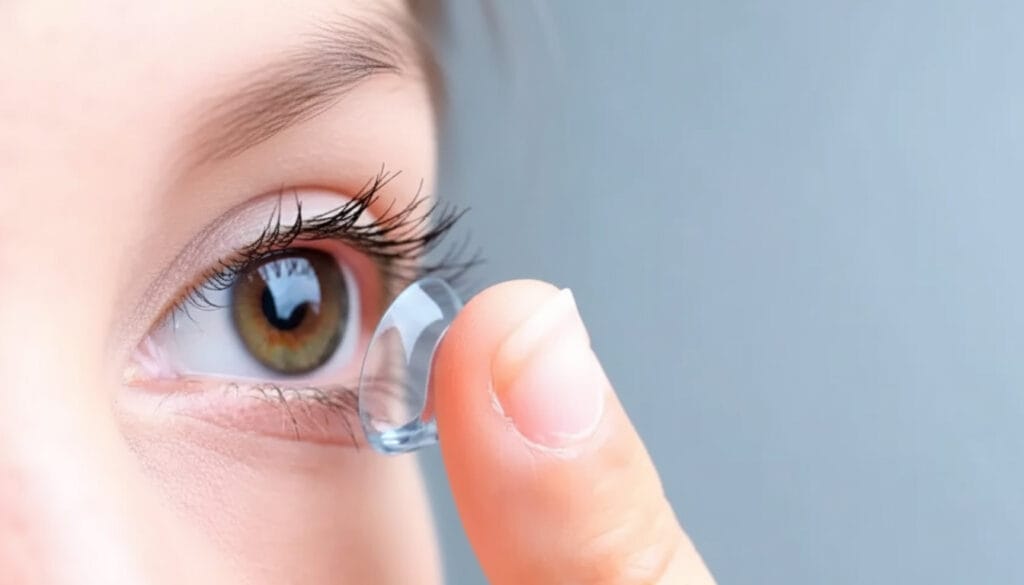
Are Contact Lenses Safe for Children?
Yes, when prescribed and monitored by an optometrist experienced in pediatric fittings. The evidence is clear and consistent.
The CLIP Study (Walline et al., Optometry and Vision Science, 2007) enrolled 84 children aged 8–12 and 85 teenagers aged 13–17. The researchers’ conclusion: “Eye care practitioners should consider routinely offering contact lenses as a treatment option, even for children 8 years old.” Neither group experienced problems related to contact lens wear during the study.
A subsequent safety review by Dr. Mark Bullimore, published in Optometry and Vision Science, found that “the incidence of corneal infiltrative events in children is no higher than in adults, and in the youngest age range of 8 to 11 years, it may be markedly lower.” The data show that zero cases of microbial keratitis were documented across nine prospective studies representing 1,800 patient years in children.
The American Academy of Ophthalmology confirms this position: there is “no reason that we shouldn’t put them in contact lenses just because of their age,” provided the child demonstrates responsibility.
What Age Can Kids Start Wearing Contact Lenses?
There is no universal minimum age. The AAO guidance, backed by practitioner surveys, shows that over 70% of optometrists believe children can start contact lenses at age 12 or younger, and research supports fitting children as young as 8.
The AAO EyeNet article on pediatric contact lens fitting frames it this way: “If their room is always a mess, then that is probably a sign that they’re not going to be fastidious about taking care of their contact lenses. But if they are responsible kids who take care of their own hygiene, then we say yes.”
Maturity markers matter far more than a birth certificate.
Readiness Checklist for Parents
Use this checklist before your first consultation. A child does not need to check every box, but most should apply:
Independence and hygiene
- [ ] Washes hands without reminders before meals and after the bathroom
- [ ] Manages their own hygiene routine (teeth, hair, nails) consistently
- [ ] Can follow a multi-step process and remember daily tasks without reminders
Motivation
- [ ] The child wants contact lenses — not just the parent
- [ ] Has a specific reason: sports, confidence, comfort, or myopia control
- [ ] Willing to practice insertion and removal before the first day of independent wear
Support system
- [ ] A parent or guardian can supervise the first 2–4 weeks
- [ ] Family is comfortable with follow-up optometry appointments every 6 months
- [ ] Glasses will be kept as a daily backup option
If several boxes are unchecked, a 6–12 month wait while reinforcing hygiene habits is usually the right call.
Contact Lenses vs. Glasses for Active Children and Sports
For children engaged in sports, contact lenses offer specific functional advantages:
| Factor | Contact Lenses | Glasses |
|---|---|---|
| Visual field | Full peripheral vision | Frame edges limit field |
| Stability | Stay in place during activity | Slip, fog, bounce |
| Safety | No broken frame risk | Risk of frame/lens injury in contact sports |
| Depth perception | Improved | Slightly reduced with thick lenses |
| Best use case | Sports and high-activity periods | School, reading, home backup |
Glasses still play an important role. For school use, homework, and screen time, glasses reduce contact lens wear time — which is always preferable. Many families find a hybrid approach works best: contacts during sport or high-activity windows, glasses otherwise.
Myopia Control Contact Lenses: The Growing Use Case
For children with progressing myopia, contact lenses are no longer just a vision correction tool. Two categories of specialty lenses now have clinical evidence for slowing myopia progression.
MiSight 1 Day (Multifocal Soft Lenses)
MiSight 1 day, made by CooperVision, is the first and only contact lens with FDA approval for myopia control in children aged 8–12. It uses a dual-focus design: the central zone corrects distance vision while peripheral zones create defocus signals that slow eye growth.
The 3-year randomized clinical trial by Chamberlain et al. (Optometry and Vision Science, 2019) reported: “Unadjusted change in spherical equivalent refraction was -0.73 D (59%) less in the test group than in the control group (-0.51 ± 0.64 vs. -1.24 ± 0.61 D, P < .001).” Axial length progression was also 52% lower in the MiSight group (0.30 vs. 0.62 mm).
MiSight is a daily disposable lens, which makes it practical for children — no cleaning solutions, no storage case, one pair per day.
Best for: Children aged 8–12 with myopia of -0.75 to -4.00 D and up to 0.75 D of astigmatism, who are motivated to wear contacts 6 days or more per week.
Orthokeratology (Ortho-K)
Ortho-K lenses are rigid gas-permeable lenses worn overnight. They gently reshape the cornea while the child sleeps, providing clear daytime vision without any lenses. The corneal reshaping also reduces the peripheral defocus signal that drives eye elongation.
The AAO Ophthalmology journal review of orthokeratology confirms it as a clinically supported myopia control method. Clinical studies show that ortho-k typically reduces axial elongation by approximately 50% over a 2-year period, with average axial length changes of approximately 0.3 mm for ortho-k patients compared to 0.6 mm for controls.
Best for: Children aged 8 and older who dislike wearing anything during the day, or who participate in water sports or contact sports where daytime lenses are impractical.
Key difference from MiSight: Ortho-K requires handling rigid lenses (more care and skill needed), costs more upfront, and demands nightly consistency. MiSight is simpler and more forgiving for less experienced wearers.
For a full comparison of myopia control options including atropine drops and defocus spectacle lenses, see the Myopia Control in Children guide.
Daily Disposable vs. Reusable Lenses for Kids
| Feature | Daily Disposable | Reusable (Bi-weekly or Monthly) |
|---|---|---|
| Hygiene | Highest — fresh lens every day | Requires cleaning and case storage |
| Convenience | No solution or case needed | Strict nightly cleaning routine |
| Cost | Higher per lens, fewer infections | Lower ongoing cost |
| Best for | Beginners, active children, myopia control (MiSight) | Older teens comfortable with full care routines |
The British Contact Lens Association and American Optometric Association both recommend daily disposables as the first choice for children, due to lower infection risk and simpler handling.
Hygiene and Care: Child-Specific Rules
Children need explicit instruction, not general adult advice. These rules should be practiced before the first independent day of wear:
Before touching lenses
- Wash both hands with soap for at least 20 seconds
- Dry hands on a clean, lint-free towel — wet hands transfer bacteria to lenses
- Never handle lenses near sinks with running water
Wearing rules
- Never sleep in lenses (even napping) unless prescribed overnight lenses (ortho-k)
- Never shower or swim with lenses in — water contact is the leading cause of Acanthamoeba infection
- Replace daily lenses each morning — never reuse a daily lens
- If a lens causes irritation, redness, or blurred vision, remove it and contact your optometrist
For reusable lenses (teens and older)
- Clean lenses with solution after removal — never use tap water or saliva
- Replace the lens case every 3 months; rinse with solution, not water, and air dry face-down
- Discard lenses on schedule — wearing monthly lenses into week 6 significantly increases infection risk
Parent role during the first month
- Watch the first 10–15 insertion and removal attempts
- Check that the lens care routine happens nightly without shortcuts
- Keep a spare pair of glasses accessible at all times
How to Safely Introduce Your Child to Contact Lenses
- Consult a pediatric optometrist who will evaluate readiness, prescribe the right lens type, and fit the lenses properly.
- Start with daily disposables — fewer steps and no cleaning solutions mean better compliance for first-time wearers.
- Practice insertion and removal at the clinic before taking lenses home. Most children need 3–5 practice sessions.
- Build the hygiene habit at home before the first solo wear — run through the hand-washing and lens routine together.
- Supervise the first 2–4 weeks and then step back as confidence builds.
- Schedule a 1-month follow-up and then every 6 months to check eye health and update the prescription.
As Dr. Jennifer Fogt, pediatric optometrist and myopia management expert at Ohio State University Wexner Medical Center, explains:
“Wearing contact lenses is a great privilege, and many children can wear them safely and successfully under the care and supervision of eye doctors and watchful parents.”
When to Pause or Stop Contact Lens Wear
Children should remove lenses and call their optometrist if they experience:
- Persistent redness or irritation that does not resolve within minutes of removal
- Unusual sensitivity to light
- Blurred vision that does not improve after removing the lens
- Any discharge from the eye
These symptoms are uncommon with daily disposables but require prompt evaluation. Do not let a child continue wearing lenses through discomfort — the cornea has no blood vessels and heals poorly from infections.
Vision Measurements and Proper Fitting
A correct contact lens prescription differs from a glasses prescription. Children undergoing myopia management often need precise pupillary distance measurements and regular axial length tracking to confirm the treatment is working. Optogrid’s photo-based measurement tool helps opticians capture accurate PD data remotely, which is particularly useful when managing young patients across multiple visits.
Frequently Asked Questions
At what age can a child start wearing contact lenses?
Research supports fitting children as young as 8 years old, provided they demonstrate responsibility and hygiene maturity. The CLIP Study found that children aged 8–12 had outcomes comparable to teenagers and no contact-lens-related problems. Most practitioners focus on behavior and motivation rather than a specific age cutoff.
Are contact lenses safer for younger children or teenagers?
Counterintuitively, research shows children aged 8–11 may have fewer adverse events than teenagers. The Bullimore safety review found that corneal infiltrative event rates for ages 8–12 were 97 per 10,000 patient years versus 335 per 10,000 for ages 13–17. Greater parental supervision during childhood likely contributes to this difference.
What is the best type of contact lens for a child just starting out?
Daily disposable soft lenses are the recommended starting point. They require no cleaning solutions, eliminate the risk of improper case hygiene, and are discarded at the end of each day. Daily disposables also allow easy breaks — if a child misses a day, there is no degraded lens waiting in a case.
Can contact lenses slow my child’s myopia from getting worse?
Specific types of contact lenses — MiSight 1 day and orthokeratology — are clinically proven to slow myopia progression. MiSight is FDA-approved for children aged 8–12 and reduced myopia progression by 59% in a 3-year clinical trial compared to standard lenses. Ortho-K reduces axial elongation by approximately 50% over 2 years. Standard single-vision contact lenses do not slow myopia progression.
My child plays sports. Are contacts better than glasses for sport?
For most sports, yes. Contact lenses eliminate the risk of frame breakage or injury, provide full peripheral vision without frame obstruction, and do not fog or slip during physical activity. For water sports (swimming, surfing), lenses must be removed before water contact to prevent Acanthamoeba infection.
How do I know if my child is ready for contact lenses?
Use the readiness checklist above as a guide. The two most reliable indicators are: (1) the child is independently managing their own daily hygiene without reminders, and (2) the child genuinely wants contact lenses — not just to please a parent or coach.
What should I do if my child complains of eye pain while wearing contacts?
Have the child remove the lens immediately. If the pain or redness persists after lens removal, contact your optometrist the same day. Do not apply over-the-counter eye drops or encourage the child to put the lens back in. Corneal infections progress rapidly and require prompt professional assessment.
Summary
Contact lenses are a safe, evidence-backed option for children aged 8 and older when readiness is properly assessed. The CLIP Study, Bullimore safety review, and AAO guidance all confirm that age alone should not be a barrier. For children with progressing myopia, specialty lenses — MiSight for daytime wear and ortho-K for overnight reshaping — offer clinically proven slowing of eye growth alongside the practical benefits of going glasses-free.
Start with a consultation with a pediatric optometrist, use the readiness checklist to evaluate your child’s preparedness, and choose daily disposables as the first lens type. Keep glasses as a reliable backup. With the right supervision and follow-up schedule, most motivated children adapt quickly and report significant improvements in confidence and activity participation.

I am a seasoned software engineer with over two decades of experience and a deep-rooted background in the optical industry, thanks to a family business. Driven by a passion for developing impactful software solutions, I pride myself on being a dedicated problem solver who strives to transform challenges into opportunities for innovation.