
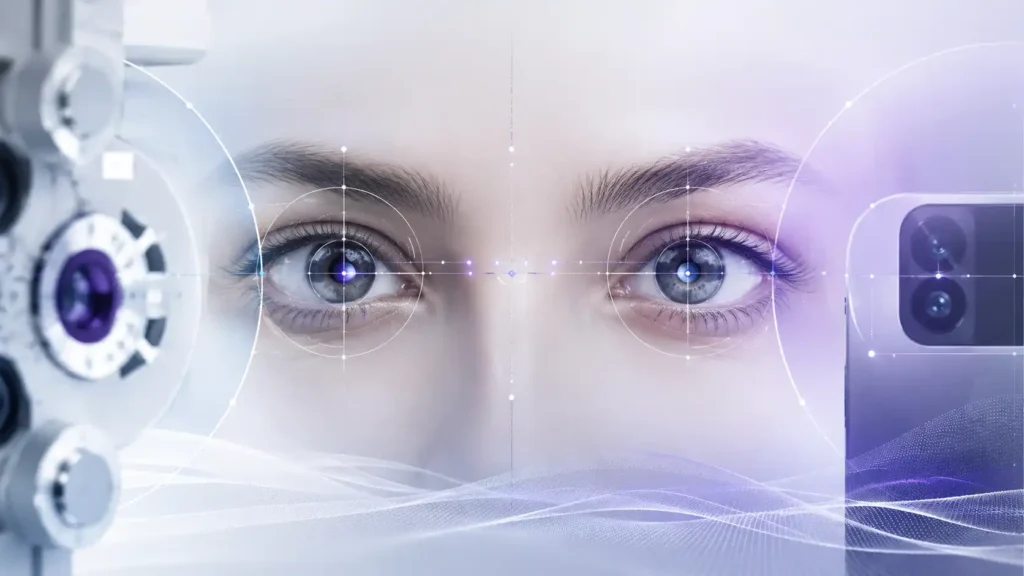
A dispensing pupillometer is an optical instrument that measures interpupillary distance (PD) by projecting a coaxial light source onto the cornea and aligning crosshairs with the resulting corneal reflex in each eye. A digital model adds an electronic scale readout, eliminating the manual sliding cursor and giving the dispenser a precise numeric value for both distance and near PD without reading a millimeter ruler. The whole measurement takes under a minute per patient and captures monocular values that a basic ruler cannot easily provide.
This article covers the dispensing pupillometer specifically. Note that “pupillometer” also refers to a different clinical device used in neurology and critical care to measure pupil size and light reactivity (the NPi-type instrument). That device has nothing to do with eyewear fitting. Everything below is about the PD-measurement instrument used on the dispensing bench.
How a Digital Pupillometer Measures PD
The dispensing pupillometer rests on the patient’s nose bridge like a pair of large binoculars. Inside, a coaxially-mounted LED projects a small spot of light onto each cornea. The key physics here: the corneal reflex lands approximately 1 mm nasal to the geometric pupil center, placing it very close to the eye’s visual axis. This is why corneal-reflex instruments are preferred for dispensing over simply measuring between pupil centers: they track where the eye actually looks, not where the pupil happens to sit.
The optician looks through the eyepieces on the opposite side, centering the crosshairs or split-prism indicator over each corneal reflex in turn. On a digital model, the electronic scale captures the position the moment the dispenser confirms alignment.
Distance PD vs Near PD
The instrument has a dial to select working distance. For distance PD, the patient fixates a target straight ahead and eyes are diverged to their natural primary position. For near PD, the instrument introduces a near target at approximately 40 cm. The eyes converge and the nasal shift is captured automatically. Near PD typically runs 3 to 4 mm less than distance PD because of this convergence. That difference matters for single-vision reading lenses and for progressive multifocals.
Monocular PD Readings
A standard ruler gives you a binocular total. A pupillometer gives you right and left monocular values separately. This matters because faces are rarely symmetric: the distance from the nose bridge to the right pupil often differs from the distance to the left. Progressive lenses and high-prescription single-vision lenses need monocular data to place the optical center correctly in front of each eye.
Accuracy: What the Research Shows
A 1998 study published in Ophthalmic and Physiological Optics tested nine corneal-reflex pupillometers from three manufacturers using calibrated steel balls at PDs of 55, 60, 65, and 70 mm. The average error in mean measurements across all test PDs was 2.3 mm, and the average standard deviation of repeated readings was 0.26 mm. The primary sources of error were poor eye relief and friction in the scale-adjustment mechanism (manufacturing issues rather than measurement method problems).
A more recent study published in the Journal of Optometry (2021) compared millimeter ruler measurements to the Essilor Pupillon pupillometer in 199 participants. The mean difference between methods was under 1 mm for monocular measurements and under 2 mm for binocular distance and near measurements. The researchers concluded that while the methods were statistically different, the difference was not clinically meaningful for most prescriptions.
Quotable takeaway: A well-calibrated digital pupillometer produces consistent repeat readings with a standard deviation below 0.3 mm, which is well within the clinical tolerance for spectacle lens centration. The larger concern is instrument accuracy across different PD values, where errors up to 2 mm have been documented in older instruments, underlining the case for periodic calibration checks.
Device Comparison: Pupillometer, Ruler, and Smartphone
| Method | Typical accuracy (vs reference) | Monocular PD | Near PD | Approx. cost | Speed |
|---|---|---|---|---|---|
| Digital pupillometer | Within 1 mm (well-calibrated) | Yes | Yes (dial setting) | $300-$700+ | 1-2 min |
| PD ruler / millimeter rule | 1-3 mm variability (operator-dependent) | Laborious | Manual convergence estimate | Under $30 | 2-3 min |
| Digital PD ruler (frame-mounted) | Varies by product | Yes | Depends on model | $50-$200 | 1-2 min |
| Smartphone app (well-tested) | ~0.5 mm MAE vs digital pupillometer (best apps) | Yes | Some apps | Software cost or free | 2-3 min |
Price note: The Essilor X81705 pupillometer lists at $628 on Essilor Instruments USA. Entry-level analog models from smaller manufacturers can be found below $300 on secondary markets. High-end digital devices with automated centration can run several thousand dollars.
For a full breakdown of each PD measurement method’s accuracy, cost, and return on investment, see PD measurement methods compared.
For detail on the frame-mounted category, see the post on the digital PD ruler (a distinct class of instrument from the handheld pupillometer).
Smartphone Measurement vs a Pupillometer
A 2023 study in Cureus compared three smartphone applications against measurements from a trained examiner using a digital pupillometer in 44 subjects. Eye Measure and Warby Parker shared a mean absolute error of 0.511 mm versus the digital pupillometer reference (no statistically significant difference between the two). The weakest app (PDCheck AR) reached 1.375 mm MAE. The authors concluded that Warby Parker performed to the highest degree of accuracy overall, based on its consistency across all tested tolerance ranges.
What that means in practice: Clinically validated smartphone software can approach pupillometer-level accuracy. The variable is not the phone camera but the algorithm, calibration reference (usually a credit card), and patient compliance.
Honest tradeoffs:
- A pupillometer is immediate, requires no patient self-service, and is familiar to any auditing inspector. It is the instrument of record.
- A smartphone workflow eliminates a dedicated device from the dispensing table, reduces per-patient contact, and can be completed before the patient reaches the counter. However, it depends on the software’s validation status and the patient’s ability to follow on-screen instructions.
- Some practices use smartphone measurement for routine prescriptions and reserve the pupillometer for high-plus, high-minus, or progressive orders where precision tolerance is tighter.
Optogrid’s measurement workflow runs on the optician’s phone or tablet and is designed for the same dispensing use cases described above. For remote dispensing and pre-visit capture, see measure PD remotely.
Typical Pupillometer Price Range
Entry-level analog pupillometers from established manufacturers generally start around $150-$300. Digital models with electronic readout from brands like Essilor or NIDEK typically fall in the $400-$800 range for new units. Advanced automated systems with digital imaging and software integration can reach several thousand dollars.
Do not buy solely on price. The 1998 accuracy study found that instrument-to-instrument variance within the same price category was substantial. Check whether the device has been independently validated for accuracy at PDs below 58 mm and above 70 mm, where errors tend to be largest.
A used or refurbished pupillometer is a legitimate option for a practice on a limited budget, but verify the scale mechanism moves freely and confirm calibration before use.
Why PD Accuracy Matters for Prescription Lenses
For single-vision lenses with powers below +/-2.00 D, a 2-3 mm centration error is manageable. For progressive multifocals or powers above +/-4.00 D, an error of that magnitude can produce prismatic imbalance, reading zone placement errors, and patient complaints. Why PD accuracy matters covers the clinical consequences in detail.
Frequently Asked Questions
What is a pupillometer used for?
In optical dispensing, a pupillometer measures the interpupillary distance (PD), the horizontal distance between the centers of the two pupils, so that lenses can be centered on the patient’s visual axes. It measures both distance PD (for general wear) and near PD (for reading or progressive zones), and provides separate monocular values for each eye.
How accurate is a digital pupillometer?
A well-calibrated digital pupillometer consistently repeats measurements with a standard deviation below 0.3 mm, which is within clinical tolerance for most prescriptions. A 1998 study of nine instruments found average errors of 2.3 mm at extreme PD values and instrument SD of 0.26 mm, meaning individual instruments varied in absolute accuracy but were internally consistent. Calibration checks are recommended, particularly for small and large PDs.
How much does a pupillometer cost?
New analog dispensing pupillometers start at around $150-$300. Digital models with electronic readout from major manufacturers (Essilor, NIDEK) are typically $400-$800. Automated systems with digital imaging can reach several thousand dollars. Refurbished units are available at a lower cost but should be verified for scale accuracy before clinical use.
Pupillometer vs PD ruler: which should I use?
A digital pupillometer provides monocular PD values, a near-PD setting, and more consistent readings than a manual ruler, particularly across operators. The manual millimeter ruler is inexpensive and adequate for straightforward prescriptions, but it is operator-sensitive: studies report 1-3 mm variability depending on technique and patient cooperation. For progressive multifocals and high-power lenses, a pupillometer or comparable digital method is the better choice.
Does a pupillometer measure near PD automatically?
Yes. Dispensing pupillometers have a dial or switch to select working distance. Setting it to a near target (typically 40 cm) causes the internal fixation target to simulate a near object, the patient’s eyes converge, and the instrument captures the converged PD. This reading is typically 3-4 mm narrower than the distance PD.
Do I still need a pupillometer if I use a smartphone PD app?
That depends on the app and the prescription. The best smartphone apps now achieve a mean accuracy within 0.5 mm of a pupillometer reference in clinical testing, which is acceptable for many prescriptions. For high-power, progressive, or occupationally critical eyewear, a dedicated instrument provides the full measurement set (near, distance, monocular) in a single controlled workflow. Some practices use both: phone capture for initial data and a pupillometer check for complex orders.
For a broader look at all PD measurement options, see PD measurement methods compared or our PD measurement walkthrough covering the ruler and app methods. For practices looking to offer remote PD capture before the patient visit, see measure PD remotely.

I grew up inside an optical shop. My mother likes to tell how, as a kid, I would watch eyeglasses being assembled, play with the tools, and draw on the back of service order slips. The family business taught me early what a precise measurement and work done right are worth.
I went on to spend more than twenty years as a software engineer, always keeping an eye on the optical world. Optogrid was born where the two meet: digital measurement technology (pupillary distance and fitting heights) built by someone who knows the dispensing counter from the inside.