

Children’s pupillary distance ranges from approximately 50 mm at age 5 to 60 mm at age 15, based on normative data from MacLachlan & Howland’s study of 1,311 subjects aged 1 month to 19 years. Growth is fastest between ages 5 and 8 (roughly 1.0-1.3 mm per year) and slows to under 0.5 mm per year by age 15. Standard adult measurement workflows produce higher error rates in children because of smaller absolute values, developing facial anatomy, and limited cooperation. A 2 mm error on a 62 mm adult PD is 3%; the same error on a 48 mm child PD is 4% and produces proportionally greater prismatic imbalance.
Why Children’s PD Behaves Differently Than Adults
Four factors make pediatric measurement fundamentally different from adult measurement, not just a scaled-down version of it.
Smaller absolute values, less margin for error. When a child’s PD is 50 mm, a 2 mm bilateral error shifts the optical centers 4 mm from the pupils. The resulting prismatic imbalance is larger, relative to the prescription, than the same millimeter error in an adult. For children in single-vision lenses with moderate to high prescriptions, this translates directly into adaptation complaints, headaches, or poor visual performance.
Asymmetric facial development. Monocular PD asymmetry (the difference between right and left monocular half-distances) is more pronounced in developing faces. Children whose faces are still growing may show left-right differences of 2 mm or more. Always measure monocular PDs in children rather than relying on binocular PD divided by two.
Ongoing growth. Based on the regression equations from MacLachlan & Howland (2002), a child’s PD grows approximately 1.3 mm per year at age 5 and approximately 0.9 mm per year at age 10. A measurement taken 18 months ago for a 7-year-old may now be 1.5-2 mm short of the current value. For progressives or high-prescription single-vision lenses, that gap matters.
Cooperation constraints. Children move, look away, blink at the wrong moment, and may not understand fixation instructions. Instruments designed for adults who can hold steady for 3-5 seconds frequently produce single-capture errors in children under 8. Multiple captures and verification are not optional.
PD by Age: Reference Table
This table uses values calculated from the MacLachlan & Howland (2002) regression equations (n=1,311 subjects, ages 1 month to 19 years, published in Ophthalmic and Physiological Optics). The Fesharaki et al. (2012) study of 1,500 Iranian subjects confirms the 5-9 age group mean of approximately 55 mm, which aligns with the MacLachlan values for the midpoint of that range. Use this as a plausibility check during measurement, not as a substitute for individual measurement.
| Age Group | Average PD (mm) | Typical Range | Approx. Annual Growth |
|---|---|---|---|
| 3-4 years | 46-48 | 42-54 | 1.3-1.5 mm/yr |
| 5-6 years | 50-52 | 46-57 | 1.2-1.3 mm/yr |
| 7-8 years | 53-54 | 48-59 | 1.1-1.2 mm/yr |
| 9-10 years | 55-56 | 50-62 | 0.9-1.0 mm/yr |
| 11-12 years | 57-58 | 52-63 | 0.7-0.9 mm/yr |
| 13-14 years | 58-59 | 54-65 | 0.6-0.7 mm/yr |
| 15-17 years | 59-61 | 55-66 | 0.4-0.5 mm/yr |
How to read this table: The “typical range” reflects approximately the 5th-95th percentile spread observed in published studies. If a measured value falls outside the range for a child’s age, re-measure before ordering. The growth rates shown are averages from the MacLachlan & Howland regression model; individual children vary.
Note on populations: The MacLachlan & Howland dataset is North American. Fesharaki et al. (2012) found comparable values in an Iranian population (ages 5-9: mean 54.94±3.9 mm; ages 10-19: mean 59.75±3.7 mm), suggesting these ranges are broadly applicable across populations. Local variation exists; use clinical judgment.
Optogrid’s dataset of average PD across 14,904 measurements covers primarily adult patients. The pediatric ranges above are sourced from dedicated pediatric normative studies.
Measurement Techniques by Age Group
Ages 3-5: Photo-Based Capture Is Often the Only Reliable Method
Young children rarely hold still long enough for a conventional pupillometer to register a clean binocular measurement. A photo-based or digital capture method (including Optogrid’s camera-based workflow) has a decisive practical advantage: the child only needs to look at a target for the fraction of a second it takes to capture an image, not the 3-5 seconds a manual instrument requires.
Practical tips for this age group:
- Have a parent or assistant hold the child’s attention from behind the measuring device, at the correct working distance. A quietly moving toy or a phone screen works better than a sudden sound, which causes the child to look away.
- Take a minimum of three captures and use the median, not a single measurement.
- Check that the child is looking straight ahead, not up at a parent’s face. Downward or upward gaze shifts the apparent pupil center.
- Verify the measurement falls within the expected range for the child’s age before proceeding.
For this age group, photo-based PD measurement methods consistently outperform handheld instruments in terms of measurement repeatability.
Ages 6-10: Most Children Can Cooperate with Quick Techniques
School-age children can follow simple instructions (“look at the light” or “look at the dot”) well enough for a pupillometer or digital capture workflow. The key word is quick. A child who loses interest or looks away after 2 seconds will give you a clean measurement if your capture window is short; they will give you an error if you need them to hold for 5 seconds.
Adaptations for this group:
- Use child-friendly fixation targets where available. Small cartoon targets or animated fixation dots work better than the standard adult fixation light.
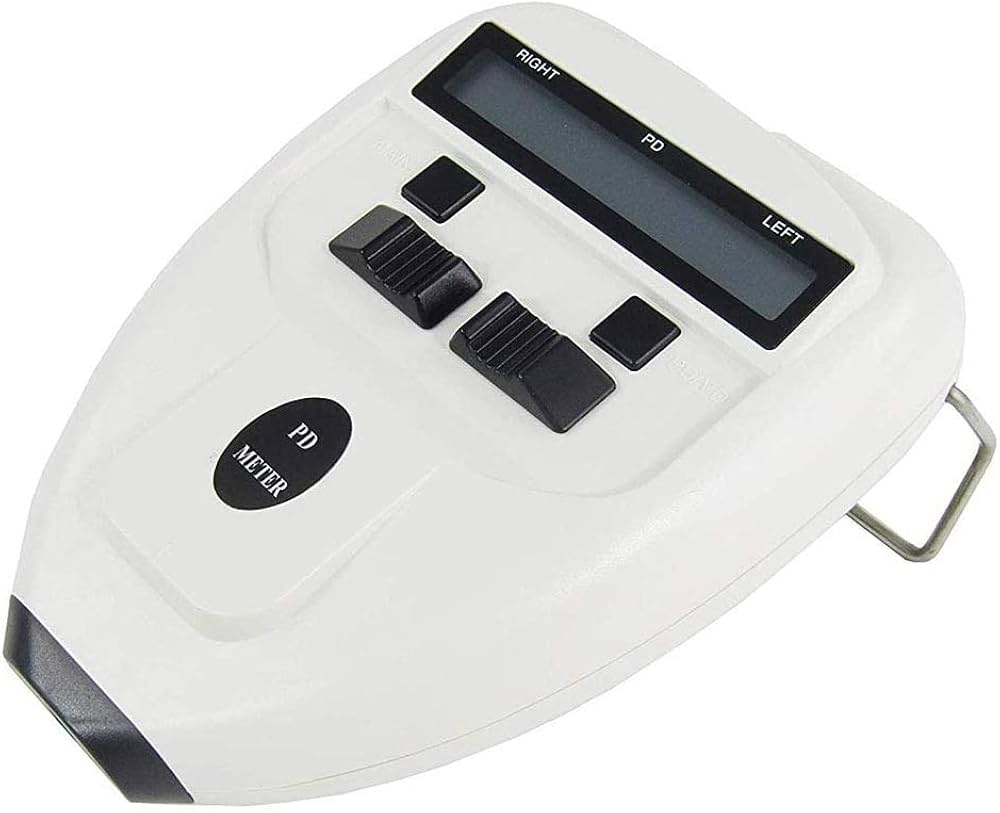
- With a conventional pupillometer, position the instrument quickly and capture as soon as fixation is confirmed. Do not reposition and wait for a second look.
- The traditional penlight/ruler method still functions if the child can fixate for 3-5 seconds, but error rates are higher than instrument-based methods. Reserve it as a backup or verification step.
- Always record monocular PDs, not just binocular. Facial asymmetry is common enough in this age group to make binocular-only measurements unreliable for lens centration.
- For progressive lens orders in this age group, verify with a second method before ordering.
Understanding visual acuity testing in children helps contextualize why accurate optical center placement matters: even a small prismatic error compounds the effect of amblyopia treatment and corrective prescriptions.
Ages 11-15: Near-Adult Protocols with One Adjustment
Adolescents can generally follow adult measurement protocols. Their cooperation is not the limiting factor; their facial anatomy still is, in one specific way: PD is still changing, and a measurement that was correct 12-18 months ago may no longer be.
For adolescents:
- Standard pupillometer and digital capture methods both work well.
- PD is approaching adult values by ages 14-15, but still growing at 0.4-0.6 mm per year. For a child with a significant prescription, re-measure at each new Rx, even if the patient says nothing has changed.
- When fitting progressive lenses, verify with a second measurement method regardless of cooperation quality. The first time a young patient wears progressives is the wrong time to discover a 2 mm measurement error.
Five Measurement Errors Specific to Children
1. Using adult instrument geometry. Many pupillometers assume a nose bridge width designed for adults. When the instrument doesn’t sit flush against a child’s smaller nose, the measurement geometry shifts. Check that the pupilometer bridge is fully seated before capturing.
2. Not correcting for convergence. A child who fixates at 25 cm instead of the instrument’s calibrated 5 m distance will appear to have a smaller binocular PD due to convergence. Digital photo-based tools that set a known fixation distance are less prone to this error.
3. Accepting one capture without verification. Single-capture measurements on adults have acceptable repeatability. In children under 10, capture-to-capture variability is higher. Take at least three measurements; discard obvious outliers.
4. Using a measurement that’s too old. A PD measurement from 18 months ago is clinically outdated for any child under 12. The chart above shows the growth rates. At age 8, 18 months of growth equals roughly 1.5 mm. For most prescriptions, that’s within tolerance; for high prescriptions or progressive lenses, it is not. This is one of the preventable errors that drives up eyeglass remake costs in pediatric dispensing.
5. Forcing measurement on a frightened child. A child who is stressed or frightened will not fixate reliably. A poor measurement obtained under duress is worse than no measurement at all, because it looks plausible. When a young child is genuinely uncooperative, schedule a second appointment. Explain the process to the parent and child. A calm second visit produces better data than a stressed first attempt.
When to Re-Measure: A Growth-Based Schedule
Because PD changes faster in younger children, the re-measurement schedule should be age-dependent. Linking PD re-measurement to the annual or biannual myopia control in children schedule works well for patients in myopia management programs.
| Age Group | Re-Measure When |
|---|---|
| Under 8 | Every new Rx, or at least every 6-12 months |
| Ages 8-12 | Every new Rx, or annually if Rx is stable |
| Ages 13-17 | Every new Rx, or every 2 years |
| Any age | Always at the switch from single-vision to progressive/bifocal |
| Any age | When the patient reports persistent adaptation problems |
The general principle: the faster PD is changing (younger children), the shorter the re-measurement interval. After age 15, PD growth is slow enough that it rarely drives remakes on its own.
Frame and Lens Fitting Considerations
Accurate PD is necessary but not sufficient for a good pediatric fit. Two other variables matter significantly.
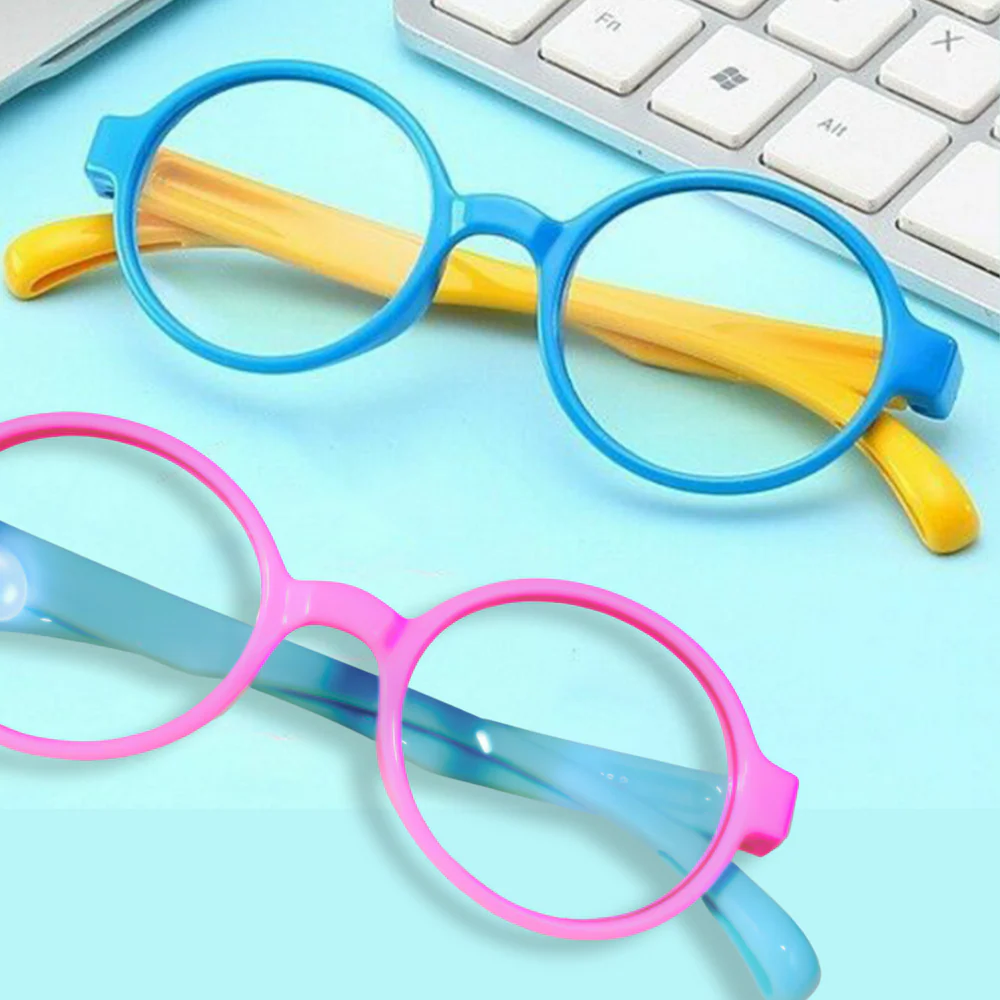
Frame geometry. A child’s smaller nose bridge and shorter temple length require frames specifically sized for pediatric faces. An adult frame worn on a child’s face shifts the lens optical center position regardless of how accurately you measured PD. If you are fitting contact lenses for kids alongside spectacles, the spectacle PD measurement still needs to account for the vertex distance and frame geometry the child will actually wear.
Lens material. The American Academy of Ophthalmology recommends polycarbonate lenses for children, specifying non-breakable frames and safety lenses with a minimum 2 mm thickness for daily wear and 3 mm for sports. Both polycarbonate and Trivex pass ANSI Z87.1 impact resistance standards. Trivex offers better optical clarity (Abbe value 43-45 vs. polycarbonate’s 30), which matters for children who are particularly sensitive to chromatic aberration. Polycarbonate is the stronger impact-resistance choice for children in contact sports. For most prescription ranges and activities, both materials are appropriate choices.
For patients with unusual prescriptions or biometric profiles, see the fuller discussion of fitting for special conditions.
Is Digital PD Measurement More Accurate for Children?
Digital and photo-based measurement tools have a meaningful practical advantage for pediatric patients: they capture in a fraction of a second and allow for multiple rapid retakes. A manual pupillometer requires the patient to hold fixation during instrument positioning; a camera-based system captures the frame at the moment of fixation.
A 2024 review published in Frontiers in Medicine (PMC11654209) found that digital measurement tools achieve a mean difference of 0.54±0.74 mm compared to pupillometer reference measurements in adult populations. The study notes that “technical challenges to measure IPD…are heightened for patients…including children and infants,” but provides no comparative pediatric data because pediatric subjects were excluded from the study design.
The practical implication for opticians: digital tools are not guaranteed to be more accurate in children than manual methods, but they are faster to operate and allow more retakes per session, which matters when you have 90 seconds with a 6-year-old before they lose interest. Multiple rapid captures with a digital tool, compared and averaged, generally produce more reliable final values than a single careful manual measurement.
Frequently Asked Questions
What is the average PD for a 10-year-old?
Based on normative data from MacLachlan & Howland (2002), a 10-year-old’s average PD is approximately 55-56 mm (combined male/female). This is roughly 7-8 mm below the average adult value of 63 mm. Fesharaki et al. (2012) found a mean of 59.75±3.7 mm for ages 10-19 as a combined group, which includes the higher adolescent values and is consistent with this range.
At what age does PD stop changing?
PD growth slows progressively through adolescence. Based on the MacLachlan & Howland regression equations, growth rate drops below 0.5 mm per year around age 15, and values approach adult stability by ages 16-18. Individual variation is significant; some patients continue to see small changes into their early twenties.
Should I always measure monocular PD for children?
Yes. Children’s faces are still developing, and left-right asymmetry is more common and more pronounced than in adults. Relying on binocular PD divided by two gives you a single centration number that may be wrong for both eyes. Record the monocular half-distances separately. This is particularly important for progressive lenses and any prescription with significant cylinder.
Can I use a phone photo to measure a child’s PD?
Phone-based PD measurement apps can produce clinically usable results for children, particularly in the 6-17 age range where cooperation allows for a stable photo. The key requirement is a known reference distance or calibration object in the photo. For children under 6, or any case involving progressive lenses, verify a phone-based measurement with a second method before ordering.
What if the child won’t cooperate during measurement?
Do not force a measurement on a distressed child. A frightened child will not fixate reliably, and a plausible-looking but inaccurate measurement is worse than an acknowledged incomplete one. Options: schedule a second appointment with better preparation; involve the parent in the fixation process; use a photo-based tool that captures in under a second; or, for older children, explain what you are doing and why. In rare cases with very young children, a trained assistant who knows the child may be able to hold their attention more effectively than the optician can.
How often should I re-measure a child’s PD?
The re-measurement schedule should track with the child’s age and rate of growth. Under age 8: at every new Rx, or at least every 6-12 months. Ages 8-12: at every new Rx, or annually. Ages 13-17: at every new Rx, or every 2 years. Always re-measure when switching from single-vision to progressive lenses, regardless of how recent the last measurement was.
What accuracy is required for a child’s PD?
The same clinical threshold applies to children as to adults: within 0.5 mm per eye for progressive lens prescriptions. For single-vision lenses with moderate prescriptions, 1 mm error is typically within tolerance. For high prescriptions (above ±5.00 D), the prismatic consequence of a 1 mm centration error is large enough that 0.5 mm or better accuracy is worth pursuing even for single-vision orders. Children may be less able to articulate adaptation discomfort than adults, making accurate measurement more important, not less.
Is digital PD measurement more accurate than manual for children?
Digital tools have not been tested head-to-head against manual methods in large pediatric studies. Their practical advantage is speed: a camera-based tool can capture in under a second and allow multiple rapid retakes within a single patient session. For children whose main measurement challenge is cooperation and stillness, speed and repeatability matter more than the marginal accuracy differences between instrument types.

I am a seasoned software engineer with over two decades of experience and a deep-rooted background in the optical industry, thanks to a family business. Driven by a passion for developing impactful software solutions, I pride myself on being a dedicated problem solver who strives to transform challenges into opportunities for innovation.