
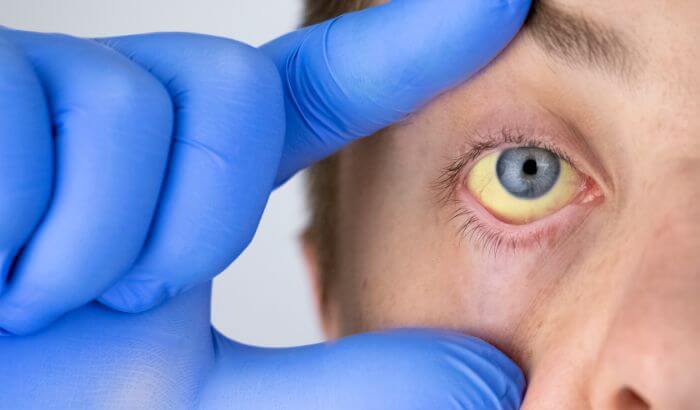
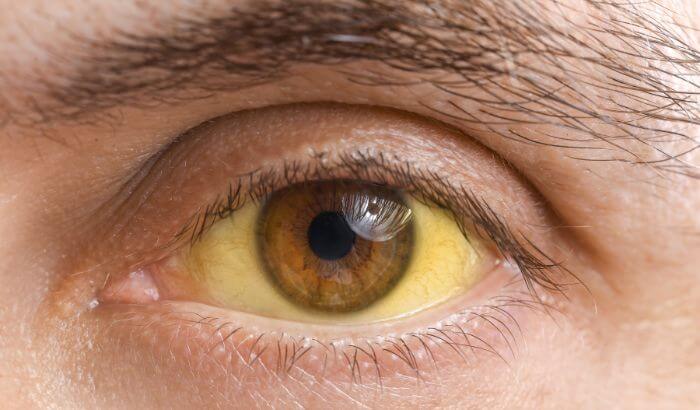
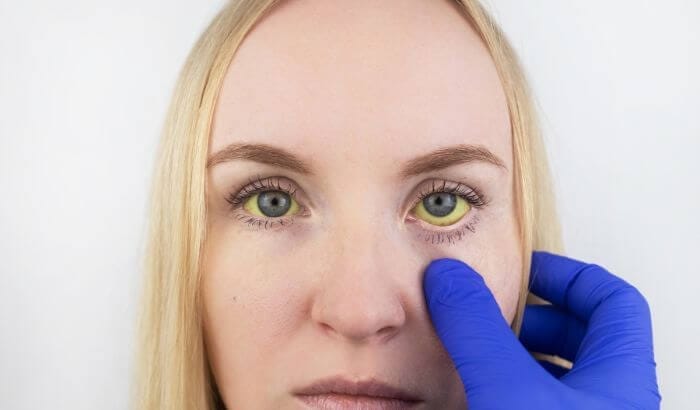
Yellow eyes are a visible sign of jaundice: an accumulation of bilirubin in the blood above 3 mg/dL that stains the sclera (the white of the eye) yellow or orange. According to NCBI StatPearls, scleral icterus becomes visible when serum bilirubin exceeds 3 mg/dL, while normal levels range from 0.1 to 1.2 mg/dL per NIH MedlinePlus. The most common underlying causes are liver disease (hepatitis, cirrhosis), bile duct obstruction (gallstones, tumors), and blood disorders (hemolytic anemia). Yellow eyes should never be dismissed as minor: per the Cleveland Clinic, jaundice always requires prompt medical evaluation to identify the underlying cause. Seek emergency care immediately if yellowing is accompanied by fever above 38°C (100.4°F), severe abdominal pain, confusion, or signs of bleeding.
What Yellow Eyes Are and Why They Occur
Yellow eyes are a visible manifestation of jaundice, a condition in which the sclera, skin, and mucous membranes take on a yellow or orange tint. To understand the underlying eye anatomy involved, the sclera is the tough outer coat of the eyeball, and it is particularly susceptible to bilirubin staining because of the high collagen content in the tissue, which binds bilirubin avidly.
According to NIH MedlinePlus, jaundice occurs when there is too much bilirubin in the blood. Bilirubin is a yellow pigment produced naturally when the body breaks down old red blood cells. Under normal conditions, the liver conjugates (processes) bilirubin and excretes it through bile into the intestine.
How Bilirubin Causes the Yellow Coloration
Jaundice becomes visible when serum bilirubin exceeds 3 mg/dL, compared to a normal range of 0.1 to 1.2 mg/dL per NIH MedlinePlus. When the liver cannot process bilirubin fast enough, when the bile ducts are blocked, or when red blood cells are destroyed too rapidly, bilirubin accumulates in the blood and deposits in tissues, producing the characteristic yellow discoloration.
The sclera is often the first place jaundice becomes visible because it has a high collagen concentration and a rich blood supply close to the surface.
Main Causes of Yellow Eyes
Jaundice: The Most Common Cause
Jaundice results from bilirubin accumulation through three distinct mechanisms:
- Pre-hepatic jaundice: Excessive production of bilirubin from accelerated red blood cell destruction (hemolysis)
- Hepatic jaundice: Liver dysfunction that impairs bilirubin metabolism
- Post-hepatic (obstructive) jaundice: Bile duct blockage that prevents bilirubin excretion
Liver Disease
Viral, Alcoholic, and Autoimmune Hepatitis
Hepatitis in any form compromises the liver’s ability to conjugate and excrete bilirubin. According to WHO updated hepatitis B guidelines, more than 250 million people live with chronic hepatitis B globally, and jaundice is a common symptom during acute flares. Viral hepatitis A, B, and C, alcoholic hepatitis, and autoimmune hepatitis all produce the same end result: impaired bilirubin processing and visible scleral icterus.
Cirrhosis
Cirrhosis replaces functional liver tissue with scar tissue, progressively impairing all liver functions. Research published in NCBI on liver cirrhosis reports that 10-year survival for compensated cirrhosis is approximately 47%, falling to 16% after a decompensation event such as the onset of jaundice. Once jaundice appears in cirrhosis, it indicates significant functional impairment.
Liver Cancer
Hepatocellular carcinoma and bile duct cancers (cholangiocarcinoma) can obstruct biliary drainage from within or outside the liver, producing obstructive jaundice as a sign of advanced disease.
Blood Disorders
Hemolytic Anemia
Conditions that cause abnormally rapid destruction of red blood cells flood the liver with more bilirubin than it can process. According to Haematologica (European Hematology Association), first-line therapy with corticosteroids is expected to provide a response in 70-85% of patients with warm autoimmune hemolytic anemia, though only around one in three maintain long-term remission after discontinuation. Causes range from autoimmune disease to genetic conditions (sickle cell disease, hereditary spherocytosis) and infections.
Bile Duct Obstruction
Gallstones
Gallstones lodged in the common bile duct block bile flow from the liver to the intestine. Bilirubin backs up into the bloodstream, producing post-hepatic jaundice. This type is often accompanied by colicky right upper quadrant pain and is frequently treatable with endoscopic or surgical intervention.
Tumors and Strictures
Pancreatic cancer is a particularly common cause of obstructive jaundice: the head of the pancreas lies adjacent to the common bile duct, and tumors in this location compress or invade the duct. Other causes include cholangiocarcinoma, lymph node enlargement from metastases, and benign bile duct strictures.
Malaria
In malaria-endemic regions, the parasite Plasmodium destroys red blood cells at a rapid rate, producing a hemolytic pre-hepatic jaundice. According to the WHO malaria fact sheet, malaria caused an estimated 282 million cases globally in 2024. Travelers returning from endemic regions who develop yellow eyes should be evaluated for malaria as part of the differential diagnosis.
Pinguecula (Localized Yellow Spot, Not True Jaundice)
A pinguecula is a small, yellowish or whitish growth on the conjunctiva (the membrane covering the white of the eye). Unlike jaundice, it is a localized benign deposit of protein and calcium, not a systemic bilirubin elevation. It produces a focal yellow spot near the corneal edge without any systemic symptoms. A clinician can distinguish it from jaundice immediately by location and context.
What Opticians and Ophthalmologists Spot Before the Patient Does
Eye care professionals occupy a unique early-warning position in the jaundice detection chain. A patient may walk in for a routine frame adjustment or annual refraction with no awareness that anything is systemically wrong, and the optician or ophthalmologist at the dispensing counter or slit lamp will be the first person to notice.
Counter lighting catches subtle icterus before mirror awareness. The intense, close-range lighting at an optical dispensing counter tends to illuminate the bulbar conjunctiva more consistently than a bathroom mirror under home lighting. In practice, subtle bilirubin staining that a patient has attributed to tiredness or screen time looks distinctly yellow-orange under the counter lamp. This is not a clinical examination, but it is often where the conversation begins: “Has anyone mentioned your eyes look a little yellow?” That question, asked by an optician during a frame fitting, has triggered more than a few urgent GP referrals.
At the slit lamp, early hyperbilirubinemia leaves a clear signature. Per NCBI, conjunctival icterus becomes apparent when bilirubin levels exceed 2 mg/dL, before the 3 mg/dL threshold at which most patients notice yellowing themselves. Under slit lamp biomicroscopy, the diffuse yellow-amber staining of the bulbar conjunctiva is visible at this earlier threshold, particularly in the lower bulbar region when the patient looks up. In patients with darker skin, the conjunctiva may be the only visible jaundice sign on external examination.
The pinguecula differential is a daily optometry task. Both conditions produce yellow coloration at the limbus, but they are clinically distinct:
| Feature | Scleral Icterus | Pinguecula |
|---|---|---|
| Distribution | Diffuse, bilateral, involves full sclera/conjunctiva | Focal, raised nodule at nasal or temporal limbus |
| Color | Uniform yellow-amber stain | Yellow-white or grey-white, may be slightly elevated |
| Symmetry | Bilateral and symmetric | Often unilateral, or asymmetric if bilateral |
| Systemic symptoms | Present (dark urine, fatigue, abdominal symptoms) | Absent |
| Cause | Elevated serum bilirubin | UV and wind-related conjunctival degeneration |
| Referral needed | Yes, urgent internal medicine | No (unless growth or irritation) |
Per NCBI StatPearls on pinguecula, a pinguecula “appears as a grey white-yellow mass on the bulbar conjunctiva” with predilection for the nasal conjunctiva at the 3 or 9 o’clock position. The nodular, raised morphology and focal location distinguish it immediately from the smooth, diffuse staining of icterus.
The carotenoderma exception. A third yellow-eye mimic worth knowing: carotenemia from excessive dietary beta-carotene can turn the skin and even the conjunctiva faintly yellow but characteristically spares the sclera, producing yellowing in the skin folds and palms rather than in the whites of the eye. This scleral sparing is the key distinguishing feature when a patient arrives with yellow-tinted skin but a normal scleral exam.
When an optician or ophthalmologist identifies probable scleral icterus, the appropriate next step is same-day referral to a primary care physician or emergency department, depending on whether systemic symptoms (fever, severe abdominal pain, confusion) are present.
Identifying Yellow Eyes: Symptoms and Warning Signs
Visual Recognition
Jaundice is identified by direct inspection of the sclera in natural light. Artificial lighting, especially fluorescent, distorts the apparent color. Under normal conditions the sclera appears white or faintly blue-white; bilirubin staining turns it yellow or orange. In systemic jaundice the coloration is symmetric. Natural daylight gives the most accurate assessment: ask the person to look up slightly while you examine the lower sclera.
Symptoms Associated with Jaundice
Yellow eyes from jaundice are rarely the only finding. The accompanying symptoms provide critical clues about the underlying cause:
| Symptom | Description | Clinical Significance |
|---|---|---|
| Yellowed skin | Generalized yellow skin tint | Confirms elevated bilirubin (>3 mg/dL) |
| Dark urine | Tea- or cola-colored urine | Excess bilirubin excreted by the kidneys |
| Pale stools | Grey or white stools | Bile not reaching the intestine |
| Intense itching | Generalized pruritus, worse at night | Bile salts depositing in skin |
| Fatigue | Extreme tiredness and weakness | Liver dysfunction or anemia |
| Abdominal pain | Discomfort in the right upper quadrant | Possible bile duct obstruction or hepatitis |
Jaundice does not directly impair visual acuity: the yellowing stains the sclera but does not affect the cornea, lens, or retina in typical cases.
Emergency Symptoms
Seek emergency medical care immediately if yellow eyes appear alongside any of the following:
- Fever above 38°C (100.4°F)
- Severe pain in the right upper abdomen
- Confusion, excessive drowsiness, or disorientation (signs of hepatic encephalopathy)
- Persistent vomiting
- Signs of bleeding: dark tarry stools, blood in vomit, or easy bruising
- Rapidly worsening jaundice over hours or days
Light sensitivity (photophobia) occasionally accompanies acute hepatitis, particularly during the prodromal phase.
When to Seek Medical Attention
Situations Requiring Urgent Evaluation
The Cleveland Clinic recommends seeing a doctor immediately when you notice any yellowing of the eyes or skin, as jaundice can signal liver, blood, or gallbladder problems.
Seek emergency care in the following situations:
- Jaundice with fever and chills: May indicate cholangitis (bile duct infection), which can progress to septic shock within hours
- Severe abdominal pain: Especially in the right upper quadrant or radiating to the back; may signal acute biliary obstruction or perforation
- Altered mental status: Confusion, agitation, or excessive sleepiness can indicate hepatic encephalopathy, a life-threatening complication of liver failure
- Bleeding signs: Coagulopathy from liver failure causes easy bruising and spontaneous bleeding
Scheduled (Non-Urgent) Appointments
Book a same-week (not emergency) medical appointment when:
- Mild yellowing of the eyes appears with no other symptoms
- Persistent fatigue occurs alongside darker-than-usual urine
- You have a family history of liver or blood disorders
- Regular alcohol use coincides with new changes in eye color
Diagnosing Yellow Eyes
Initial Clinical Assessment
A doctor will conduct a physical examination looking at:
- Degree of icterus in the sclera, skin, and mucous membranes
- Liver and spleen size and texture (abdominal palpation)
- Signs of chronic liver disease: spider angiomas, palmar erythema, ascites
An ophthalmologist can also identify early scleral icterus during routine eye examinations, sometimes before patients notice yellowing themselves. This is one reason regular eye exams carry value beyond vision correction.
Essential Lab Tests
Bilirubin Measurement
According to NIH MedlinePlus, normal bilirubin values are:
- Total bilirubin: 0.1 to 1.2 mg/dL (1.71 to 20.5 µmol/L)
- Direct (conjugated) bilirubin: less than 0.3 mg/dL (less than 5.1 µmol/L)
Jaundice becomes visible when total bilirubin exceeds 2.5 to 3 mg/dL. The ratio of direct to indirect bilirubin helps differentiate the cause: elevated indirect (unconjugated) bilirubin suggests hemolysis or liver cell dysfunction; elevated direct (conjugated) bilirubin points toward bile duct obstruction.
Liver Function Panel
- Transaminases (AST, ALT): Elevated in hepatocellular injury (hepatitis, drug toxicity)
- Alkaline phosphatase and GGT: Elevated in cholestasis (bile duct obstruction)
- Albumin and prothrombin time: Assess liver synthetic function; abnormal values indicate more severe impairment
Complete Blood Count (CBC)
Identifies hemolytic anemia through:
- Decreased hemoglobin
- Elevated reticulocytes (young red blood cells, indicating accelerated production)
- Abnormal red blood cell morphology on peripheral smear
Imaging Studies
Abdominal ultrasound: The standard first imaging test, evaluating liver size and texture, gallstones, bile duct dilation, and hepatic or pancreatic masses.
CT scan or MRI: Used when ultrasound is inconclusive or when tumor characterization is needed.
Magnetic resonance cholangiopancreatography (MRCP): Provides detailed imaging of the bile ducts without invasive procedures, useful for diagnosing stones or strictures.
Treatment Based on the Underlying Cause
There is no treatment that “whitens” the eyes directly. The yellow color resolves only when bilirubin levels fall, which happens when the underlying cause is treated. The specific treatment depends entirely on diagnosis.
Treating Liver Disease
Acute Viral Hepatitis
If jaundice results from acute viral hepatitis, it typically resolves as the liver recovers. Supportive management includes:
- Adequate rest during the acute phase
- Oral hydration
- Balanced diet without specific fat restriction
- Complete abstinence from alcohol
- Avoiding hepatotoxic medications
- Regular monitoring of liver function tests
Per the WHO hepatitis A fact sheet, “there is no specific antiviral treatment for hepatitis A” and “the management of hepatitis A focuses on supportive care to relieve symptoms and ensure adequate hydration and nutrition.” Similarly, per the WHO hepatitis E fact sheet, “there is no specific antiviral treatment capable of altering the course of acute hepatitis E,” and the infection is “usually self-limiting.” Hepatitis B and C, however, may require antiviral therapy.
Chronic Hepatitis and Cirrhosis
- Antivirals: Direct-acting antivirals for hepatitis B and C
- Corticosteroids and immunosuppressants: For autoimmune hepatitis
- Complication management: Diuretics for ascites, lactulose for encephalopathy, beta-blockers for portal hypertension
- Liver transplant: For end-stage liver disease when other options are exhausted
Treating Bile Duct Obstruction
Gallstones
- Endoscopic retrograde cholangiopancreatography (ERCP): Endoscopic removal of common bile duct stones
- Cholecystectomy: Laparoscopic gallbladder removal to prevent recurrence
- Biliary drainage: For complete obstruction when endoscopic removal is not immediately possible
Tumors and Strictures
- Surgery: Resection where technically feasible
- Biliary stents: Metal or plastic stents to maintain bile duct patency
- Chemotherapy and radiotherapy: For malignant causes
Treating Blood Disorders
For hemolytic anemia, treatment options include:
- Corticosteroids: First-line for autoimmune hemolytic anemia; effective in 70-85% of patients per Haematologica
- Intravenous immunoglobulin: For severe or refractory cases
- Immunosuppressants: Rituximab, azathioprine for steroid-dependent disease
- Folic acid supplementation: Supports new red blood cell production
- Blood transfusion: For life-threatening anemia
- Splenectomy: In selected refractory cases
Phototherapy (Neonates)
For neonatal jaundice, high-intensity LED phototherapy is the standard treatment. Blue-spectrum light at approximately 460 to 490 nm converts unconjugated bilirubin in the skin into water-soluble isomers that the body can excrete without liver conjugation. Per NICE guidance on neonatal jaundice (CG98), phototherapy should start promptly when bilirubin levels approach treatment thresholds based on gestational age and postnatal hours.
The 2022 AAP clinical practice guideline updated neonatal phototherapy thresholds significantly from the 2004 guideline, introducing age- and risk-stratified nomograms that account for gestational age, postnatal hours, and hyperbilirubinemia neurotoxicity risk factors. Under the current 2022 framework, the earlier 25 mg/dL figure cited in older literature now falls within exchange-transfusion territory rather than the phototherapy initiation threshold, which is individualized and generally lower. Parents should always consult a pediatrician: thresholds vary considerably by gestational age and clinical risk.
Supportive Medications
- Ursodeoxycholic acid: Improves bile flow in certain cholestatic conditions
- Antihistamines or cholestyramine: For bile salt-related itching
- Fat-soluble vitamins (A, D, E, K): For malabsorption caused by prolonged cholestasis
Prognosis and Recovery
Recovery Timeline
How quickly the sclera returns to normal depends on the cause and how promptly treatment begins:
| Condition | Average Recovery Time |
|---|---|
| Acute viral hepatitis | 2 to 6 weeks after treatment begins |
| Bile duct obstruction (after clearance) | 1 to 2 weeks |
| Hemolytic anemia (with treatment) | 2 to 4 weeks |
| Compensated cirrhosis | Variable; may persist chronically |
Factors Affecting Prognosis
According to research on liver cirrhosis from NCBI:
- Severity of liver dysfunction: Measured by the Child-Pugh score and the MELD score. A MELD score above 15 in a patient with jaundice typically warrants consideration for transplant listing.
- Cause of jaundice: Obstructive causes from benign stones carry a better prognosis than malignant obstruction or decompensated cirrhosis.
- Presence of complications: Infections, bleeding, or encephalopathy worsen outcomes significantly.
- Treatment adherence: Consistent follow-up is critical for chronic liver and blood conditions.
Post-Treatment Monitoring
After jaundice resolves:
- Periodic liver function tests
- Follow-up with a hepatologist or gastroenterologist
- Hepatitis A and B vaccination if not previously immunized
- Lifestyle adjustments per the diagnosed condition (alcohol cessation, weight management)
Preventing Jaundice and Yellow Eyes
Protecting Liver Health
Vaccination
Following WHO’s 2024 hepatitis B guidelines, the hepatitis B vaccine is one of the most effective tools for preventing liver disease leading to jaundice. WHO has set a target of reducing new hepatitis infections and deaths by 90% and 65%, respectively, by 2030.
Recommended vaccines:
- Hepatitis A (two doses)
- Hepatitis B (three-dose primary series, with options for accelerated schedules)
- Combined hepatitis A + B vaccine
Alcohol Moderation
Alcohol is among the leading causes of preventable liver disease. Safe limits are up to one standard drink per day for women and two per day for men, with two or three alcohol-free days per week. Any established liver disease warrants complete abstinence.
Responsible Medication Use
- Avoid self-medicating with analgesics or anti-inflammatories beyond recommended doses
- Paracetamol (acetaminophen) is hepatotoxic in excess: do not exceed 3 to 4 grams per day; lower thresholds apply if you drink regularly or have liver disease
- Inform your doctor of all medications and supplements, including herbal products
Preventing Blood Disorders
- Annual blood count if family history includes hemolytic anemia or hereditary hemoglobin disorders
- Regular follow-up for known autoimmune conditions
- Avoid hemolysis triggers in susceptible individuals (certain medications and fava beans in G6PD deficiency)
Preventing Gallstones
- Maintain a healthy body weight; obesity significantly increases gallstone risk
- Avoid very-low-calorie diets or rapid weight loss (accelerates cholesterol stone formation)
- Eat a diet rich in fiber and low in saturated fat
- Regular physical activity
- Adequate hydration
Safe Practice
Per the WHO hepatitis prevention guidelines, essential prevention services include:
- Use only sterile instruments for piercings, tattoos, and medical or dental procedures
- Blood safety: receive transfusions only in certified medical facilities
- Prevention of mother-to-child transmission: antiviral prophylaxis for pregnant people with hepatitis B
- Harm reduction: needle exchange programs for people who inject drugs
Routine Check-Ups
Regular check-ups should include:
- Complete blood count (annually)
- Liver function tests (AST, ALT, bilirubin) annually, or more often if risk factors exist
- Abdominal ultrasound if liver or gallbladder disease risk factors are present
An ophthalmologist can also identify early scleral changes during routine eye exams, including subtle early-stage icterus, before patients are aware of systemic illness.
Frequently Asked Questions About Yellow Eyes
Are yellow eyes always serious?
Yes. Yellow eyes always indicate an underlying health problem requiring medical evaluation. Jaundice signals abnormal bilirubin accumulation, which can result from serious liver disease, bile duct obstruction, or blood disorders. Even mild cases need a diagnosis, because the cause determines whether treatment is urgent or can be managed on a scheduled basis.
How long does it take for yellow eyes to return to normal?
Recovery time depends on the cause. Acute viral hepatitis treated appropriately typically resolves within 2 to 6 weeks. Successful bile duct clearance usually normalizes the sclera within 1 to 2 weeks. In advanced cirrhosis, jaundice may persist chronically. Early treatment accelerates recovery significantly.
Can yellow eyes occur in newborns?
Yes. Neonatal jaundice is common. The American Academy of Pediatrics estimates that approximately 60% of full-term and 80% of preterm newborns develop jaundice in the first week of life, most of which is physiological and resolves without treatment. However, high bilirubin levels in newborns can cause permanent brain damage (kernicterus) if untreated. Under the 2022 AAP updated guideline, phototherapy initiation thresholds are now individualized by gestational age, postnatal hours, and neurotoxicity risk factors rather than a single fixed number. Always consult a pediatrician if you notice yellowing in a newborn’s eyes or skin.
Can I clear yellow eyes at home?
No. There are no effective home remedies for yellow eyes caused by jaundice. The yellow color is caused by elevated bilirubin in the blood, which requires treating the underlying medical condition. Attempting home treatment delays diagnosis of potentially serious conditions. Topical products and “natural remedies” have no proven efficacy and may be harmful.
Which doctor should I see for yellow eyes?
Start with a primary care physician or general practitioner, who will conduct an initial assessment and order blood tests. Depending on the cause found, you may be referred to:
- Hepatologist or gastroenterologist: Liver and biliary tract diseases
- Hematologist: Hemolytic anemias and blood disorders
- Surgeon: Cases requiring intervention (gallstones, tumors)
- Infectious disease specialist: Viral hepatitis or malaria
Can yellow eyes be a sign of cancer?
Yes. Jaundice can be a symptom of several cancers, including:
- Hepatocellular carcinoma: Liver cancer causing direct hepatic dysfunction
- Pancreatic cancer: Frequently obstructs the common bile duct, producing painless jaundice
- Cholangiocarcinoma: Cancer of the bile ducts themselves
- Hepatic metastases: Secondary spread of cancer from other organs
Jaundice combined with unexplained weight loss, persistent abdominal pain, or a palpable abdominal mass warrants urgent oncological investigation.
How do I tell yellow eyes apart from red or irritated eyes?
The key differences are location, distribution, and accompanying symptoms. Scleral icterus (jaundice) produces a diffuse, bilateral yellow-amber staining across the entire white of both eyes, with no itching or discharge. Red or irritated eyes from conjunctivitis show redness in the conjunctiva (the clear membrane over the white), are often unilateral or asymmetric at onset, and typically come with itching, burning, or discharge. Per NCBI, conjunctival icterus is most apparent when bilirubin levels exceed 2 mg/dL and is the first sign of systemic jaundice in dark-skinned patients. If both eyes are uniformly yellow rather than red, and there is no discharge, seek a systemic evaluation rather than treating it as an eye infection.
Is there a natural treatment for yellow eyes?
No. There is no natural treatment proven to reverse jaundice. Some plants are traditionally associated with “liver health” (milk thistle, dandelion), but there is no clinical evidence they treat jaundice effectively. Treatment requires accurate medical diagnosis, cause-specific therapy, and regular laboratory monitoring. Supportive measures (adequate hydration, a balanced diet, rest during the acute phase, and complete alcohol abstinence) can complement medical treatment but cannot replace it.
The Importance of Early Diagnosis
Yellow eyes are a visible warning that something is wrong systemically, not just in the eye. Bilirubin accumulates because the liver cannot process it fast enough, the bile ducts are blocked, or red blood cells are destroyed too rapidly. All three mechanisms have treatable causes, and outcomes are significantly better when treatment begins early.
Key points to remember:
- Seek medical attention immediately when you notice yellowing of the eyes, particularly with fever, abdominal pain, or confusion
- Early diagnosis substantially improves outcomes across virtually all causes of jaundice
- There is no single “cure” for yellow eyes: the yellow color resolves only when the underlying condition is treated
- Prevention is possible through hepatitis vaccination, moderate alcohol use, responsible medication habits, and routine blood and liver check-ups
- Regular eye examinations allow eye care professionals to identify early scleral icterus before patients notice systemic illness
Jaundice is a symptom, not a diagnosis. Identifying the cause promptly determines whether recovery is complete.
This article is intended for general informational purposes only and does not constitute medical advice. If you notice yellowing of the eyes or skin, consult a qualified healthcare professional for a proper evaluation and diagnosis.

I grew up inside an optical shop. My mother likes to tell how, as a kid, I would watch eyeglasses being assembled, play with the tools, and draw on the back of service order slips. The family business taught me early what a precise measurement and work done right are worth.
I went on to spend more than twenty years as a software engineer, always keeping an eye on the optical world. Optogrid was born where the two meet: digital measurement technology (pupillary distance and fitting heights) built by someone who knows the dispensing counter from the inside.