
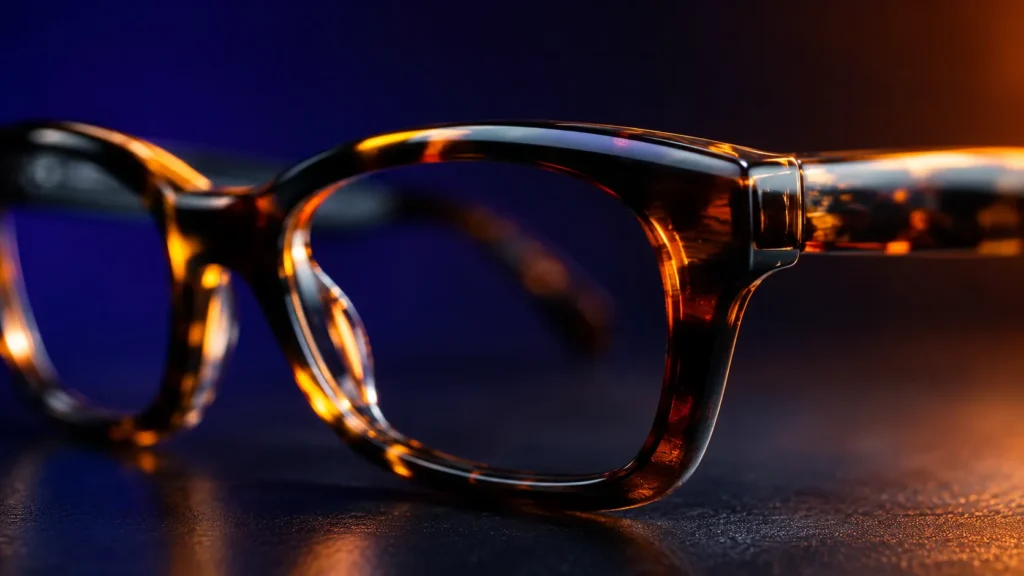
Acetate eyeglass frames are made from cellulose acetate, a plant-derived plastic manufactured from cotton fibers or wood pulp rather than petroleum. Mazzucchelli 1849, the Italian company that supplies acetate sheet to much of the eyewear industry, describes the process as starting with “the selection of renewable sources such as certain varieties of trees and cotton linters,” from which the purest cellulose is extracted and treated with acetic anhydride to form cellulose acetate powder. People choose acetate over injection-molded plastic or metal mainly for one reason: hand-cut, layered sheets produce color depth and pattern that a single-shot mold cannot reproduce. The trade-offs are weight, heat sensitivity, and the need for periodic professional adjustment, covered in detail below.
What Cellulose Acetate Actually Is
The word “acetate” on a spec sheet can describe two very different products depending on how the material was processed. In its most basic form, cellulose acetate is compounded from cotton or wood-pulp cellulose, acetic anhydride, and plasticizers, then injection-molded into a single, uniform color. This is what the American Academy of Ophthalmology describes as “Zyl (zylonite, or cellulose acetate),” noting it “is inexpensive and lightweight, and comes in many colors” and “easy for an optician to adjust.”
At the other end of the same material category sits laminated sheet acetate. Mazzucchelli 1849 blends cellulose acetate powder “with substances aimed at giving the desired workability, flexibility and toughness: the so called plasticizers,” then hand-blends the compound with pigment, layers it, and presses colored layers together so “the mixture is reduced in the form of raw sheets which are superimposed in presses and, by means of heat and pressure, melted” into blocks that are later sliced into sheet stock. Both products are legitimately “acetate.” The difference in price and feel comes almost entirely from how many hours of manual layering, curing, and cutting went into the sheet before a frame was ever cut from it, which is why the checklist later in this guide matters more than the word on the label.
How Acetate Frames Are Made: From Block to Temple
Turning acetate sheet into a finished frame combines CNC precision with manual finishing. Manufacturers use “precision CNC (Computer Numerical Control) machines” to cut acetate blocks “into frame fronts and temples”, milling the lens openings, bridge, and hinge recesses. Because acetate alone cannot survive years of flexing at the hinge, temples are reinforced: “metal core wires … are inserted into the acetate through heating and pressure,” typically by hand or with a heated jig rather than the CNC machine itself.
After milling, frames go through tumbling. They sit in “large polishing drums with small wooden chips or pumice stones” for “anywhere from 24 to 72 hours, depending on how glossy the finish needs to be,” followed by manual hand-polishing to bring out the sheen. This same appetite for a lighter alternative is why a small segment of the market has started experimenting with 3D-printed acetate-finish frames, which prototype designs claim can weigh less than milled acetate using internal lattice structures, though the technology remains in limited production, as covered in the eyeglass technology guide.
Acetate vs TR-90 vs Metal: What Actually Differs
The three materials that dominate the frame market solve different problems, and the right choice depends on what the wearer values most: color, weight, or resistance to heat and impact.
TR-90 is a nylon-based thermoplastic developed for frames that need to flex and spring back rather than hold a fixed shape, which is why it dominates sport and rimless eyewear where a frame has to survive being bent or sat on. What it does not do well is hold rich color: because the resin is a single molded color rather than a laminated stack, TR-90 frames look flatter and more uniform than acetate.
Metal frames, including titanium frames, trade color depth for a different strength: a high strength-to-weight ratio and precise, repeatable adjustments at the hinge and temple. Acetate sits in the middle on weight and durability but wins decisively on color and pattern, which is why it remains the material most opticians reach for when a wearer wants a bold or subtle tortoiseshell, marbled, or two-tone look that neither a molded nylon frame nor a monochrome metal front can replicate.
| Material | Weight | Adjustability | Color & Pattern Depth | Metal / Nickel Risk | Heat Sensitivity | Typical Price |
|---|---|---|---|---|---|---|
| Cellulose Acetate | Moderate to heavy | Very good (softens slightly with gentle heat for fitting) | Excellent (layered, hand-cut patterns) | None (plastic) | High (softens above roughly 60°C) | Moderate to high |
| TR-90 (nylon-based) | Very light | Good (flexes and returns to shape; resists permanent bends) | Limited (single molded color) | None (plastic) | Low (holds shape at higher temperatures) | Low to moderate |
| Metal / Titanium | Light to moderate | Good to excellent (CP titanium holds precise adjustments) | Limited (solid color or plating) | Varies (CP and beta-titanium are nickel-free; some alloys contain nickel) | Low (does not soften with heat) | Moderate to high |
Strengths That Make Acetate Worth the Price
Acetate’s biggest advantage is one no other frame material fully replicates: color and pattern that runs through the material rather than sitting on top of it. Because premium sheet acetate is built from layered, hand-blended color before it is ever cut into a frame shape, the pattern does not wear off, chip, or fade the way a surface coating can.
Acetate is also inherently free of metal, which matters for wearers with nickel or chromium sensitivity. A study in the Annals of Dermatology examining allergic contact dermatitis from spectacles found that “the frame is thought to be the most important and common allergen in ACD from the spectacles,” and identified nickel and chromium, both used in metal-frame plating and alloys, as “the most common ACD metal allergens.” Acetate contains neither metal, so it sidesteps that exposure pathway entirely, though low-grade plastic can still irritate sensitive skin through residual dyes or plasticizers, one more reason sourcing matters.
Acetate is also genuinely repairable and adjustable in a way molded plastics are not. Because the material softens slightly with gentle, controlled heat, a bent temple or a loose fit at the temple tip can often be corrected on acetate with a frame warmer and a skilled hand rather than requiring replacement, the same property that makes it vulnerable to accidental warping, covered next.
Trade-offs: Weight, Heat, and Adjustment
The properties that make acetate desirable also create its main limitations.
Weight is the most immediate trade-off. A laminated acetate front is denser than a molded TR-90 shell of the same size, and wearers moving from a lightweight nylon frame to a full acetate frame typically notice the difference within the first few days, particularly at the nose bridge.
Heat is the more serious risk. Acetate is a thermoplastic, and it begins to soften and lose its shape once ambient temperature exceeds roughly 60°C. That threshold is easy to cross without realizing it: research from Arizona State University measured “dashboards averaged 157 degrees” (about 69°C) after just one hour in cars parked in direct sun, well past the point where acetate warps, while cars parked in shade stayed cooler, with “dashboards averaged 118 degrees” (about 48°C) over the same hour. A frame left on a dashboard, a windowsill, or near a heater can lose its fit permanently, changing how the lenses sit relative to the eyes.
Acetate frames also need professional re-adjustment more often than metal or TR-90. The same softness that makes acetate repairable means temples loosen gradually with normal wear and need to be retightened or reshaped by an optician now and then, a routine check worth combining with a how glasses should fit visit rather than waiting until the frame feels loose. Acetate is also generally priced higher than injection-molded plastic or standard TR-90, reflecting the labor-intensive sheet production described earlier.
How to Spot Real Acetate vs Cheap Plastic
Because “acetate” describes a category rather than one fixed formulation, it is possible to buy a frame labeled acetate that behaves nothing like the premium material described above. A few practical checks separate the two before a patient leaves the dispensing table.
- Look through the material at an angle. Genuine layered acetate shows subtle color variation, swirls, or translucency as the light angle changes. Cheap, injection-molded acetate typically shows a single flat, uniform color with no depth, because the pigment was mixed once into the melt rather than layered by hand.
- Check the temple for a core wire. Flex the temple gently. A wire core gives a small amount of controlled, springy resistance and holds an adjustment; a temple with no core feels either rigid and brittle or loose and floppy, and is more likely to snap under repeated bending.
- Feel the edges and seams. Hand-finished acetate has rounded, polished edges with no visible mold line running around the frame front. A visible seam or flash line (a thin ridge of excess material) is a reliable sign of injection molding rather than milled sheet stock.
- Ask about the sheet source. Manufacturers and shops that use recognized sheet suppliers, most notably Mazzucchelli, are usually willing to say so. A shop that cannot answer where the acetate came from is often selling the lower-cost, molded version regardless of what the label says.
- Compare the weight to the size. A genuine sheet-acetate frame feels substantial for its size. A frame that feels unusually light and thin-walled for a bold acetate look is more likely hollow-molded plastic finished to resemble sheet acetate.
None of these checks require special equipment, and running through two or three of them takes less than a minute at the dispensing table.
Caring for Acetate Frames (and Who They Suit)
Acetate rewards a few simple habits. Keep frames out of hot cars, off dashboards, and away from direct heat sources like stovetops or hair dryers, since that is the fastest way to undo a professional fit. Clean the lenses and frame with a microfiber cloth and lens-safe solution rather than household glass cleaner, which can dull the acetate’s polish over repeated use; for a full walkthrough of products and techniques safe for different frame and lens materials, see caring for your glasses. Bring frames back for adjustment at the first sign of slipping or unevenness rather than waiting, since a small correction on slightly loosened temples is quicker and cheaper than fixing a frame that has been worn out of alignment for months.
Acetate suits wearers who prioritize color, pattern, and a premium, hand-finished feel over minimum weight, and who are comfortable bringing frames back for occasional adjustment. It is a strong default for most prescriptions and most face shapes, covered in more general terms in eyeglass frames, though very high prescriptions that already add lens weight, or wearers who want the lightest frame possible, are usually better served by TR-90 or titanium instead. Unlike rimless frames, which rely on a metal or nylon-cord mount rather than a full plastic front, acetate needs at least a partial rim to hold its shape, so it is not the material to reach for if a rimless or semi-rimless look is the priority.
Frequently Asked Questions
Are acetate frames better than plastic frames?
“Plastic” and “acetate” are often treated as separate categories, but cellulose acetate is itself a plastic. The real distinction is between basic injection-molded acetate, which the American Academy of Ophthalmology describes as “inexpensive and lightweight,” and hand-finished laminated sheet acetate, which costs more because of the labor involved in layering and cutting. Neither is universally better: sheet acetate wins on color depth and adjustability, while molded acetate is a reasonable budget option.
Do acetate frames break easily?
No. Properly made acetate frames hold up well under normal wear, and the metal wire core inside quality temples adds resistance to snapping. The main risk is heat, not impact: sustained temperatures above roughly 60°C can soften and permanently warp the frame, which is a different failure mode than the material being fragile.
Are acetate glasses heavy?
Acetate is heavier than TR-90 or titanium of the same size, since the material is denser and the frame front is typically thicker to show off the layered color. Most wearers adjust within a few days, though anyone with a strong prescription that already adds lens weight may prefer a lighter frame material.
Can acetate frames be adjusted?
Yes. Acetate is one of the more adjustable frame materials because it softens slightly with gentle, controlled heat, which lets an optician reshape the temples or nose area without breaking the frame. That same property means the fit can loosen gradually over time and benefits from a periodic professional check rather than a one-time adjustment at purchase.
How do I clean acetate frames?
Rinse with lukewarm water and a small amount of mild soap, then dry with a microfiber cloth rather than a paper towel or clothing, which can scratch the polished surface. Avoid household glass cleaners and high-heat drying, both of which can dull the finish or soften the material over repeated use.
Are acetate frames hypoallergenic?
Acetate contains no metal, so it avoids the nickel and chromium exposure that a dermatology study identified as “the most common ACD metal allergens” in spectacle-frame contact dermatitis. Low-quality acetate can still contain plasticizers or dyes that irritate sensitive skin occasionally, so the word “acetate” alone is not an automatic guarantee, but it removes the single largest cause of frame-related allergic reactions.

I grew up inside an optical shop. My mother likes to tell how, as a kid, I would watch eyeglasses being assembled, play with the tools, and draw on the back of service order slips. The family business taught me early what a precise measurement and work done right are worth.
I went on to spend more than twenty years as a software engineer, always keeping an eye on the optical world. Optogrid was born where the two meet: digital measurement technology (pupillary distance and fitting heights) built by someone who knows the dispensing counter from the inside.