
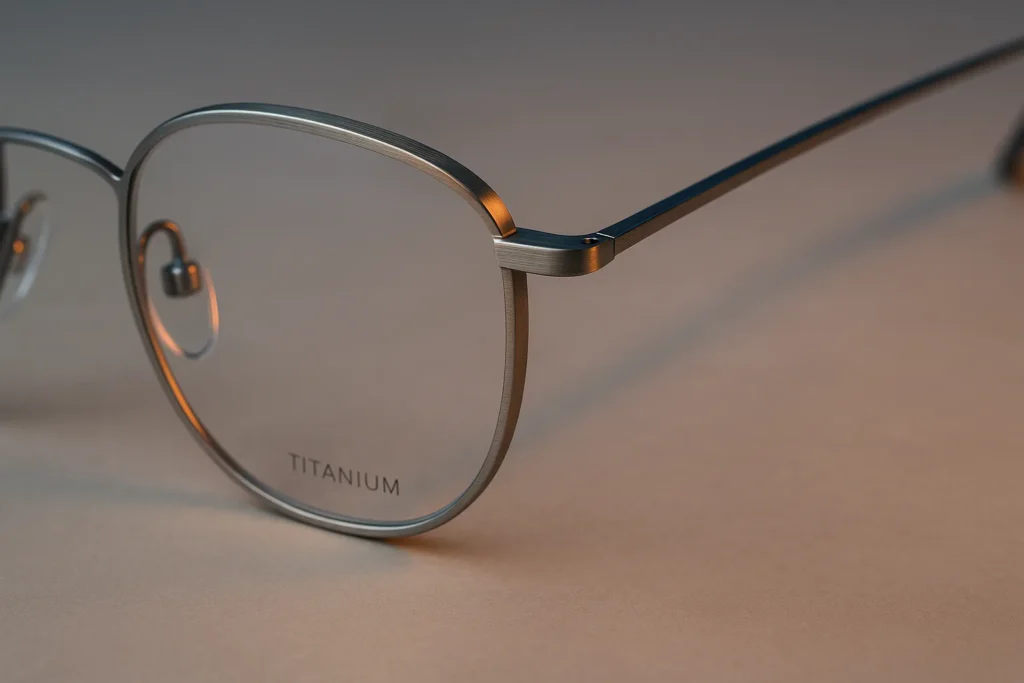
Titanium eyeglass frames are worth the investment for wearers who prioritize durability, low weight, or skin sensitivity. The American Academy of Ophthalmology describes titanium as “very strong, lightweight and corrosion-resistant” and hypoallergenic, which separates it clearly from monel, a nickel-copper alloy common in lower-cost metal frames. Compared to monel’s density of roughly 8.8 g/cm³, titanium sits at about 4.5 g/cm³, a difference that translates into a noticeably lighter frame across a full day of wear. Titanium resists corrosion without any protective plating, and it contains no nickel, the metal most commonly responsible for allergic contact dermatitis from eyewear. The trade-offs are real: titanium costs more, requires specialized soldering equipment for repairs, and comes in three distinct variants that behave quite differently in daily use.
Three Types of Titanium Frames
The term “titanium” on a frame can refer to commercially pure titanium, beta-titanium alloy, or memory metal, each with distinct properties. Knowing the difference helps you match the frame to how you plan to wear and adjust it.
Commercially pure (CP) titanium refers to titanium with a purity of at least 99 percent. It is the original titanium used in optical frames, chosen for its combination of low weight, corrosion resistance, and nickel-free composition. CP titanium is relatively stiff, which lets an optician make precise angular adjustments to temple arms and nose pads that hold their position reliably over time.
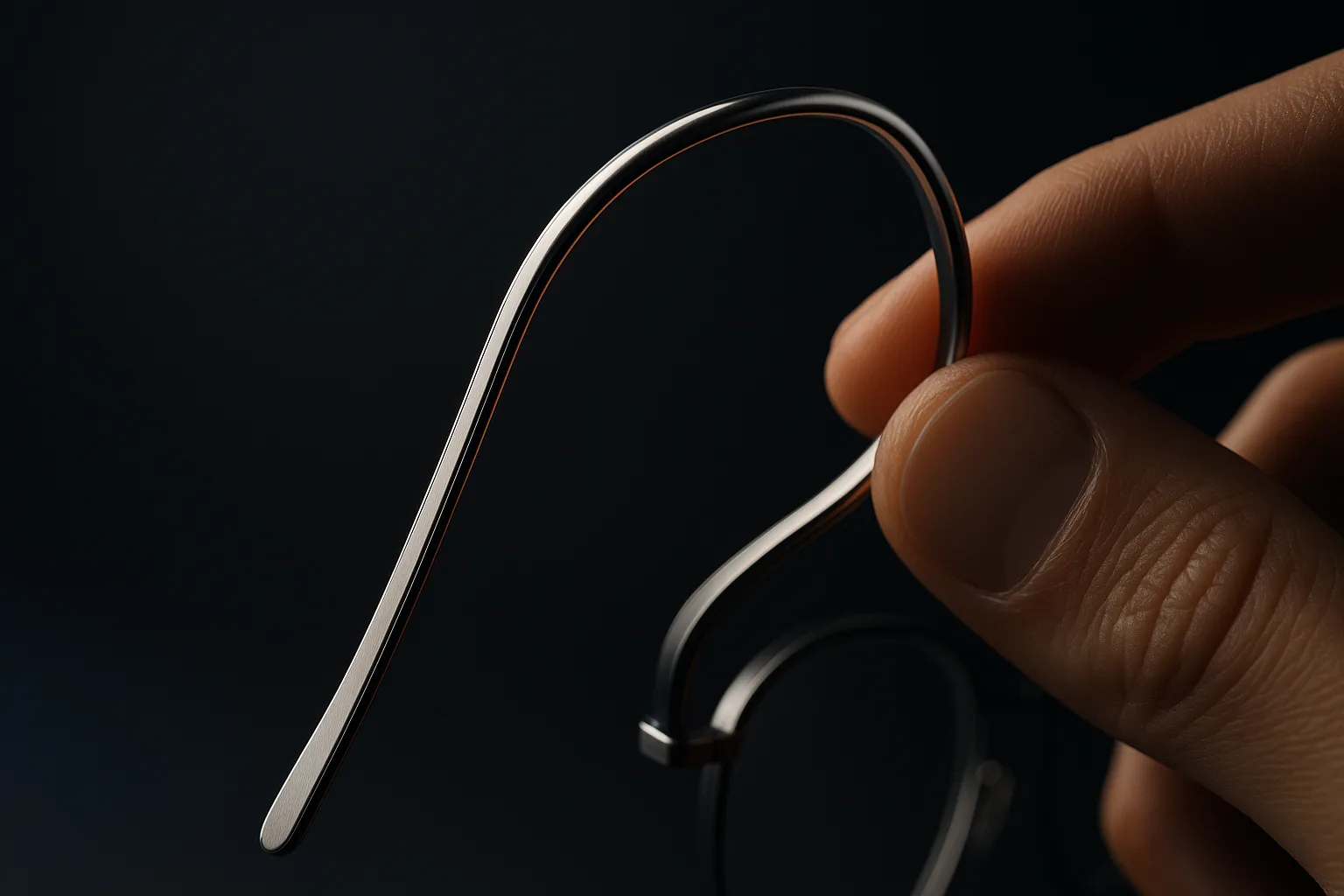
Beta-titanium is an alloy that combines titanium with metals such as vanadium and aluminum to produce a material that is springier and more elastic than CP titanium. Frames made from beta-titanium have a slight flex in the temples that many wearers find comfortable during extended wear, since the arms apply gentle, consistent pressure rather than rigid contact. The spring-back tendency also means adjustments require more care: the optician needs to bend beta-titanium further than the intended final angle to account for the material returning partway toward its starting position. For a practical overview of what proper frame fit involves, how glasses should fit covers the key pressure points and alignment checks.
Memory metal, sold commercially under names like Flexon (by Marchon), is a nickel-titanium alloy known as nitinol. Flexon frames feature “memory metal in the bridge and/or temples allowing them to be flexed, bent or twisted and return to their original shape”. That superelastic behavior makes the frames highly resistant to permanent deformation, which suits active wearers or anyone who frequently stresses their frames. However, nitinol is a nickel-titanium compound, and memory metal is not hypoallergenic since it contains nickel. Wearers with nickel sensitivity should not assume that the word “titanium” in a frame description guarantees a nickel-free product.
What Frame Labels Actually Mean
Frame labeling is not governed by a single international standard, so the same claims can appear on frames of very different quality. “100% Titanium” or “Pure Titanium” should indicate CP titanium at 99 percent purity or higher. “Beta Titanium” or “β-Ti” identifies the spring alloy. “Titanium Alloy” covers a wide range: it includes legitimate beta-titanium frames but can also describe low-grade alloys where titanium is a minor component in a base metal structure. “Memory Metal” or “Memory Titanium” typically refers to nitinol, though the term is not standardized and can appear on other flexible alloys.
Look for a material stamp inside the temple arm. If you are uncertain about a specific frame, ask the optician for the manufacturer’s technical specification.
The Case for Titanium
Low weight is the most immediate advantage, and it matters most for wearers carrying heavy lenses. High-index lenses reduce lens thickness but do not eliminate mass, and a lighter frame reduces cumulative pressure on the nose bridge and behind the ears across a full day. The AAO notes that stainless steel is “lightweight and strong, but not as light as titanium”, positioning titanium at the lighter end of the metal-frame spectrum.
Corrosion resistance is genuine and practical. Titanium develops a stable titanium dioxide surface layer that protects the underlying metal without any applied coating. Standard metal frames rely on electroplated finishes that can chip or wear through over years of exposure to sweat and moisture, eventually exposing the alloy beneath and leading to discoloration or skin contact with the base metal.
The hypoallergenic property of CP titanium and beta-titanium is clinically relevant for a substantial portion of wearers. Nickel is one of the most common causes of allergic contact dermatitis, affecting approximately 8 to 19 percent of adults in population studies. Eyeglass frames rest against the nose bridge and temple skin for hours daily, so a frame that releases nickel ions can produce chronic low-grade irritation that is easy to misattribute. CP titanium and beta-titanium frames eliminate this source of irritation entirely.
Trade-offs Worth Knowing
Titanium frames cost more than monel or stainless alternatives, and the markup reflects real differences in raw material and manufacturing, not only brand positioning. Titanium is harder to machine and form than softer alloys. If a frame breaks at the bridge or hinge, repair requires argon-atmosphere soldering or laser welding; most optical shops send titanium repairs out rather than performing them in-house, which adds time and cost.
Color selection was once limited to silver and gunmetal because titanium does not accept conventional electroplating reliably. Vacuum-deposition techniques have changed this considerably: Blackfin, an Italian titanium-eyewear maker, describes a process in which “a metal or other precious material is first vaporised and then deposited atom by atom on the frame” inside a vacuum-sealed chamber, producing a harder and more durable color layer than traditional electroplating. IP-coated titanium is now available across a wide palette of finishes.
Frame adjustment on titanium also deserves attention. CP titanium can be adjusted with standard tools by a competent optician, but the material is less forgiving than monel: over-bending is harder to reverse without risking a stress fracture, and the frame should not be heated the way acetate can be. Frame adjustment on titanium is best handled by someone with specific experience in metal frames. Memory metal is the most constrained: the alloy’s shape-recovery property means conventional bending produces little lasting result.
Variable quality in the market adds another consideration. Some lower-cost frames labeled “titanium alloy” contain only a small percentage of titanium in a predominantly nickel or zinc base. Buying from established optical brands with transparent material disclosures reduces this risk substantially.
Who Gets the Most from Titanium
The clearest beneficiaries are wearers with high-power prescriptions, since the weight savings matter most when lenses are already adding mass to the frame. People with nickel sensitivity or chronic nose-bridge irritation from metal frames should start specifically with CP titanium or beta-titanium, and should avoid memory metal. Active wearers who frequently stress or damage frames benefit from beta-titanium or memory metal’s resilience, with the caveat that memory metal is not suitable for nickel-sensitive wearers.
Rimless and minimalist styles are disproportionately built from titanium because no other common frame metal combines the required rigidity with low density at those thin dimensions.
Before settling on a frame material, reviewing how to choose eyeglass frames can help align the material choice with frame style, face shape, and prescription. It is also worth pairing that decision with a lens material comparison, since the best frame material depends partly on the lens thickness and weight your prescription requires.
Accurate pupillary distance (PD) and segment height (SH) measurements matter equally alongside the frame choice. When fitting high-prescription lenses into lightweight titanium frames, Optogrid gives opticians digital tools to capture and confirm these values precisely, reducing centering errors at the dispensing step.
Frame Material Comparison
| Frame Type | Weight | Adjustability | Hypoallergenic | Durability | Cost |
|---|---|---|---|---|---|
| CP Titanium | Very light | Good (stiff; holds adjustment) | Yes (nickel-free) | Excellent | High |
| Beta-Titanium | Very light | Moderate (springs back; requires deliberate technique) | Yes (nickel-free) | Excellent | High |
| Memory Metal (Nitinol) | Very light | Limited (resists permanent bending) | No (contains nickel) | Excellent | High |
| Monel | Moderate | Very good (easy to bend and hold) | No (nickel-copper alloy) | Good | Low-moderate |
| Stainless Steel | Moderate-light | Good | Varies (many nickel-free options available) | Good | Moderate |
| Cellulose Acetate | Light | Very good (softens with heat) | Yes | Moderate | Low-moderate |
Frequently Asked Questions
Are titanium eyeglass frames actually hypoallergenic?
Commercially pure (CP) titanium and beta-titanium frames contain no nickel and are genuinely hypoallergenic. Memory metal frames (nitinol) are not: nitinol is a nickel-titanium alloy, and the word “titanium” in the name does not mean the frame is nickel-free. If nickel sensitivity is a concern, look specifically for frames labeled “CP titanium” or “beta titanium” and confirm with the manufacturer that no nickel-containing alloys are present.
What is the difference between CP titanium and beta-titanium?
CP titanium is at least 99 percent pure titanium. It is stiffer, holds adjustment precisely, and is the baseline for titanium’s corrosion resistance and hypoallergenic properties. Beta-titanium is an alloy that adds vanadium and aluminum to increase springiness. Beta-titanium temples flex slightly and return toward their original position, which some wearers find more comfortable, but the spring-back behavior requires a skilled optician to achieve accurate final adjustments.
Can titanium frames be adjusted at any optical shop?
CP titanium can be adjusted by any competent optician, though the material requires more care than monel or stainless and should not be over-bent. Memory metal (nitinol) is the exception: because the alloy returns to its original shape, conventional bending produces little lasting effect. Memory metal adjustments require specialized techniques, and not every shop is equipped to handle them. Before purchasing memory metal frames, confirm that your optician has direct experience with the material.
Why do titanium eyeglass frames cost more than standard metal frames?
Titanium is harder to machine and form than monel or zinc alloys, increasing production time and tool wear. Repairs require argon-atmosphere or laser welding rather than standard solder, which most shops send out. The raw material cost is also higher. These factors together account for the price difference rather than marketing alone.
Are titanium frames a good choice for high prescriptions?
Yes. Titanium’s low density means the frame itself adds less weight, which matters most when high-index lenses are already adding significant mass. Even high-index lenses involve some weight at strong prescriptions, and a lighter frame reduces nose-bridge pressure over a full day. Getting pupillary distance and segment height correct is equally important, since a lightweight frame cannot compensate for lenses positioned off-center.
How can I tell if a frame labeled “titanium” is genuinely titanium?
Look for a stamp on the inside of the temple arm that reads “Pure Titanium,” “100% Ti,” or “β-Ti.” Weight is a practical indicator: a genuine titanium frame feels noticeably lighter than a monel frame of similar size. Frames labeled only “titanium alloy” may contain a small fraction of titanium in a base-metal structure. Buying from established optical brands with published material disclosures, or asking your optician for the manufacturer’s specification sheet, significantly reduces the chance of purchasing a misrepresented product.

I grew up inside an optical shop. My mother likes to tell how, as a kid, I would watch eyeglasses being assembled, play with the tools, and draw on the back of service order slips. The family business taught me early what a precise measurement and work done right are worth.
I went on to spend more than twenty years as a software engineer, always keeping an eye on the optical world. Optogrid was born where the two meet: digital measurement technology (pupillary distance and fitting heights) built by someone who knows the dispensing counter from the inside.