Skip to content

Saulo Garcia

I am a seasoned software engineer with over two decades of experience and a deep-rooted background in the optical industry, thanks to a family business. Driven by a passion for developing impactful software solutions, I pride myself on being a dedicated problem solver who strives to transform challenges into opportunities for innovation.
Pantoscopic Tilt: How Frame Angle Changes Lens Power, Progressive Fitting, and When to Compensate

Pantoscopic Tilt: How Frame Angle Changes Lens Power, Progressive Fitting, and When to Compensate

Pantoscopic tilt is the angle between the plane of a spectacle lens and the vertical plane when the frame is worn in the patient’s habitual head position. Most adults wear frames at 8-12 degrees of tilt. This angle changes effective lens power, induces unwanted cylinder, and shifts the optical center position relative to the pupil.Continue reading “Pantoscopic Tilt: How Frame Angle Changes Lens Power, Progressive Fitting, and When to Compensate”
Remote Eyewear Fitting Playbook for Optical Shops

Remote Eyewear Fitting Playbook for Optical Shops

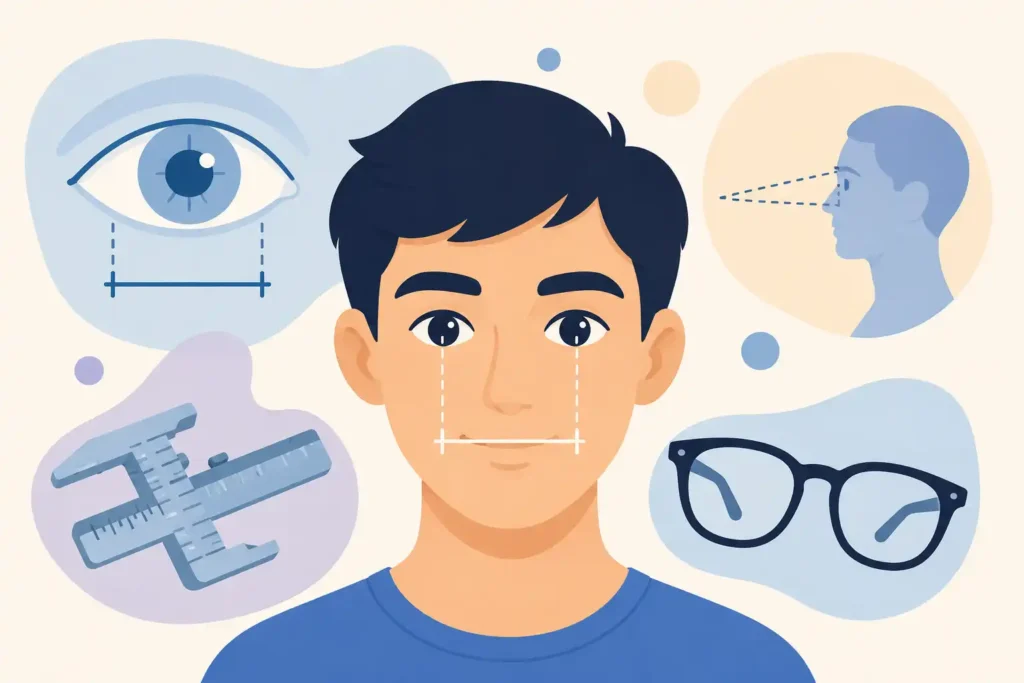
Yes, you can fit and sell prescription eyeglasses remotely. You need to solve five problems: collecting a verified prescription, capturing accurate remote measurements, guiding frame and lens selection at a distance, executing clean lab orders, and supporting the patient after delivery. This playbook walks through each step with the operational detail you need to launchContinue reading “Remote Eyewear Fitting Playbook for Optical Shops”
Photochromic Lenses: How They Work and Brand Comparison

Photochromic Lenses: How They Work and Brand Comparison

Photochromic lenses (also called photosensitive or light-adaptive lenses) darken automatically when exposed to UV radiation and return to clear indoors. The reaction relies on organic photochromic molecules, primarily naphthopyrans, that undergo a reversible ring-opening reaction when UV light breaks a carbon-oxygen bond. Most current models reach full darkening in 15 to 45 seconds and needContinue reading “Photochromic Lenses: How They Work and Brand Comparison”
Color Blindness Test: Types, Methods, and Results

Color Blindness Test: Types, Methods, and Results

The Ishihara color plate test is the most widely used color blindness screening method, with sensitivity reaching 99% at a three-error threshold according to research in Ophthalmic and Physiological Optics. For general office screening, Ishihara plates are sufficient. When precise classification of the type and severity of deficiency is needed, such as for occupational certificationContinue reading “Color Blindness Test: Types, Methods, and Results”